Is Crew Sickness an Extraordinary Circumstance? EU and UK Cases
Understand the crew-sickness decisions in Lipton and TAP Portugal, distinguish other medical events and prepare a flight-specific compensation request.

Practical guidance expanded and reviewed September 17, 2026.
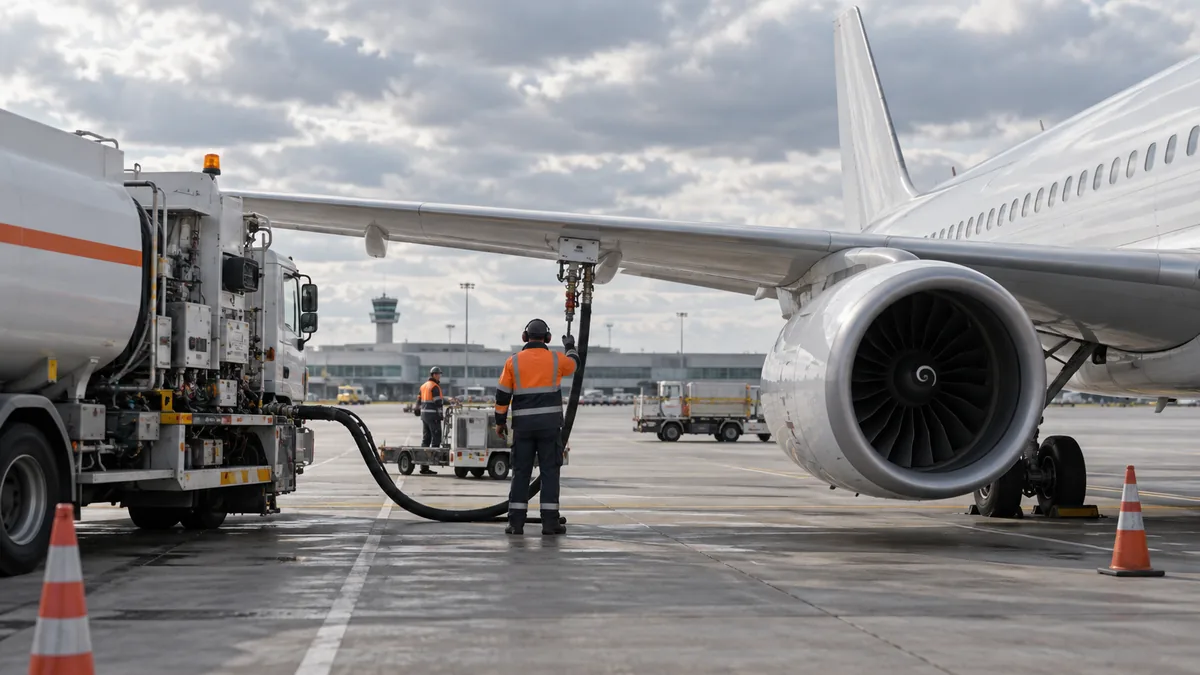
Sources checked September 8, 2026. This is a crew-sickness guide, not a diagnosis or an assessment of an individual claim. AI-generated illustration of generic travel context, not a photograph of the reported event, airport or a customer.
Crew sickness is not an automatic extraordinary circumstance
Quick answer: Unexpected absence through crew illness is generally treated as part of airline operations in the EU and UK decisions discussed below. That does not make every crew-related disruption payable: the route, type of disruption, timing and actual explanation still matter.
Keep the airline's exact words. “Pilot unavailable through illness” identifies a different issue from a duty-time limit following an airspace restriction, or a diversion for an ill passenger. Do not replace all three with a generic crew-problem label.
Which crew problem did the airline actually report?
A message saying “crew issues” is a starting point, not a complete explanation. The comparison below helps you request the facts without assuming that every staffing problem has the same legal outcome.
| Explanation | What to establish | Useful request |
|---|---|---|
| An essential crew member became ill | The absence caused the delay or cancellation. The Lipton and TAP cases below concern unexpected essential-crew absence. | Ask the airline to confirm the operational reason, notice time and replacement travel offered. You do not need the employee's diagnosis or medical records. |
| Staffing shortage or no standby crew | Whether the shortage itself caused the disruption, or followed another identified event. | Ask what caused the shortage on this flight and what replacement arrangements were considered. Do not infer deliberate understaffing from a short app message. |
| Crew reached a duty-time limit | When the limit was reached and what earlier events consumed the available time. | Request the sequence: original disruption, relevant operational restriction, crew availability and eventual departure or cancellation. |
| A passenger needed urgent medical help | Whether there was a diversion or other interruption, and its link to your flight's later disruption. | Ask for a non-identifying operational explanation and transfer timeline. Do not request another passenger's name or health information. |
A safety limit is not a claim shortcut. Crew must not fly when unfit or outside applicable safety limits. The compensation question is why your journey was disrupted and whether the relevant legal defence is established, not whether staff should have ignored those limits.
The Supreme Court's Lipton explanation and the CJEU's TAP Portugal summary support the essential-crew sickness distinction. They do not resolve every later duty-time or passenger-emergency scenario. Keep those cases and the facts of your own journey separate.
What the extraordinary-circumstances test asks
The Commission's interpretative guidelines, section 5 explain the distinction between events inherent in airline activity and events outside actual control. Causation and reasonable measures also matter. An airline invoking the defence must substantiate it; a passenger should still provide the booking and disruption evidence supporting the claim.
External events need a specific explanation
An identified security restriction or air-traffic decision can be relevant. Ask what affected the flight and when. A broad reference to disruption across the network does not establish the sequence on its own.
Ordinary operational events need different treatment
Unexpected sickness is not extraordinary merely because no replacement was readily available. Equally, do not infer negligence, deliberate understaffing or an unsafe operation without evidence. The legal classification is not a judgment about whether an ill employee should have worked.
Why sickness and crew planning are linked
Airlines need personnel to operate flights, and the possibility that an employee becomes unfit is part of organising that activity. The decisions below concern unexpected absence of essential crew. They do not require passengers to prove that a named standby pilot could have taken over at a particular minute.
Practical questions remain useful: was the flight cancelled, when was the passenger informed, what transport was offered and what caused the eventual arrival delay? Keep those facts separate from an argument about the availability of reserve crew.
UK decision: Lipton v BA Cityflyer
In Lipton, [2024] UKSC 24, July 10, 2024, the Supreme Court rejected the airline's appeal concerning a pilot's unexpected illness. The booked Milan Linate to London City flight on January 30, 2018 was cancelled; replacement travel arrived just over two and a half hours late. The Court treated the pilot's non-attendance through illness as inherent in the carrier's activity.
Why the timing matters: Lipton concerned a cancellation. Its arrival delay does not replace the three-hour threshold used for an ordinary long-delay compensation claim. Check which disruption you experienced before comparing your facts with the case.
EU decision: TAP Portugal
In joined cases C-156/22 to C-158/22, May 11, 2023, the CJEU addressed a cancellation following the unexpected death of a co-pilot shortly before departure. Unexpected illness or death of an essential crew member fell within normal airline staff planning. It was not an extraordinary circumstance simply because the absence was unforeseen.
The EU and UK judgments are separate authorities. Cite the relevant decision and explain how the airline's stated reason matches its issue; do not present either case as a worldwide passenger-compensation rule.
Check route coverage before calculating an amount
| Journey | Starting point |
|---|---|
| Departure from the EU | Check EU261 coverage and the actual disruption. |
| Departure from the UK | Use UK261, including its sterling amounts. |
| Balkan departure | Identify the operating carrier and destination, then check EU/UK scope and the relevant local implementation and complaint route. |
| Connecting itinerary | Retain every sector and the booking arrangement; do not assess the first flight in isolation. |
How to respond to a crew-sickness explanation
The illness was sudden
Ask how that distinguishes the case from unexpected crew absence considered in the relevant judgment. Suddenness alone is not the complete test.
No replacement crew was available
Record that explanation without assuming it proves or defeats compensation. Ask whether another event contributed and keep the replacement itinerary.
The airline cites a court decision
Request the case reference and the factual distinction relied on. Check the court, date and jurisdiction; an older decision or a different medical event may not answer the same question.
The airline cites force majeure
A contractual label does not itself resolve statutory passenger rights. Request a flight-specific explanation and the legal provision relied on, without accusing staff of dishonesty.
Passenger illness and later crew limits are different
An in-flight passenger emergency may require diversion. A crew duty-time limit might then be a later consequence. Record the order of events: which flight diverted, why, when the crew limit was reached and what replacement was considered. Do not apply a pre-departure sickness judgment mechanically to that sequence.
Build a cause-and-effect timeline
Hypothetical example: At 10:00 the app reports an airspace restriction. At 12:20 a message says the crew will reach its duty limit. At 14:10 the airline cancels. Preserve all three messages rather than submitting only the last one as proof of ordinary crew sickness. The airline still needs to explain the connection and relevant measures; the sequence alone does not decide compensation.
Conversely, a first message reporting a pilot's illness should not silently become a weather explanation in your file. Save both accounts and ask why they differ. State what you know, mark recollections as recollections, and avoid filling gaps with a flight-tracking estimate presented as an airline admission.
Suggested follow-up: Your message at [time/date] states [exact reason]. Your later response states [different or additional reason]. Please explain the sequence affecting flight [number/date], how it caused the disruption and what measures were considered. Please provide the complaint reference. I am requesting operational facts, not anyone's medical information.
Use the missing-document checklist if the original message is unavailable. For an actual diversion, record the transfer and final arrival timeline. Hotel or meal receipts belong in the separate care-expenses request, not an assumed fixed-compensation total.
Prepare a focused claim
1. Save the reason
Retain the original email or app message, including the date and flight reference.
2. Keep the itinerary and arrival evidence
Save the booking, boarding passes, replacement transport and final arrival record. Separate necessary care receipts.
3. Check the right disruption test
For cancellation, examine notice and offered rerouting. For delay, examine final arrival. Establish the applicable regime before selecting a currency or amount.
4. Submit directly or choose independent help
You can use the airline's official process without a claims-company fee. Keep a submission copy and reference.
5. Review a rejection on its facts
Use the appropriate ADR, regulator or court process where justified. Check deadlines; neither a judgment citation nor a paid representative guarantees success.
Use the cases to ask the right question
The central distinction is unexpected crew absence versus a different external event and its consequences. A concise timeline helps an airline or independent reviewer see that distinction.
Related claim guidance
- Compare extraordinary-circumstances examples
- Prepare the evidence file
- Respond to an airline rejection
FlyClaimer provides information and referrals. AirHelp operates the optional checker; its eligibility, fees and terms apply. FlyClaimer does not represent passengers in claims.
Related travel tools
Optional partner links matched to this guide. FlyClaimer may earn a commission, but these links do not change our passenger-rights guidance.

We may earn a commission. Disclosure