Extraordinary Circumstances Flight Compensation: What Airlines Must Prove
Extraordinary circumstances are not a magic phrase. Airlines must connect the event to your disruption and show reasonable measures could not avoid it.

Extraordinary circumstances require proof, not just a phrase
Quick answer: An extraordinary-circumstances rejection is a reason to examine the airline's evidence, not proof that you must give up or that payment is guaranteed. Check the event, its connection to your flight and the reasonable measures taken. Keep compensation separate from refunds and care expenses.
If the airline has rejected your delay or cancellation claim, start with the exact wording of its response. Does it identify an event and explain the timeline, or only use a broad label such as “operational reasons”? A focused question about a missing fact is more useful than sending a long list of unrelated court cases.
This guide concerns the EU261 defence and practical complaint steps, with a separate UK escalation route. First check your EU passenger-rights coverage or UK261 coverage. Not every international flight falls under these rules.
What the law actually requires
Article 5(3) concerns exemption from fixed compensation, not a general release from every passenger obligation. The Commission's interpretative guidelines, section 5, require evidence of the exceptional event, the causal link and reasonable measures. The event must be outside the carrier's actual control and not inherent in its normal activity. The assessment is case-specific.
| Question | Useful detail to request | What your own record adds |
|---|---|---|
| What happened? | The event, location and affected time window. | The reason given at the gate and in later messages. |
| How did it affect this flight? | The disruption timeline, including any earlier aircraft rotation. | Your itinerary, revised departure messages and actual arrival record. |
| What alternatives were considered? | The measures taken and why available alternatives were unsuitable. | Rebooking offers and your dated requests for help. |
| What part of the request was refused? | Separate decisions on compensation, airfare and expenses. | An itemised list of the amounts you actually requested. |
The same guidelines say evidence relied on should accompany the response and be provided without charge, subject to national document-access rules. Ask for relevant extracts or reports, not unrestricted access to every maintenance file or personal crew record. A vague answer can be challenged; it does not automatically decide the claim in your favour.
Air traffic management: what the January 2026 judgment says
In T-134/25, D v P, 21 January 2026, the General Court addressed delayed slots and an earlier flight in the same aircraft rotation. It did not declare that regular congestion or a tight schedule automatically defeats an airline's defence.
An air traffic management decision can qualify when it is outside the airline's control, including where the airline did not contribute to that decision. The ruling also allows reliance on an earlier flight's event where a direct causal connection is established. The exceptional part of a mixed-cause delay matters; the event need not itself last three hours. Those are fact-dependent questions, not an automatic approval or rejection of all ATC claims.
Practical question: “Please identify the restriction affecting our aircraft, its timing, any earlier affected flight, and how that explains our final arrival delay.” This request is more useful than assuming that another flight departing on time disproves your airline's explanation.
Crew sickness: identify the actual staffing problem
The relevant EU authority is TAP Portugal, joined cases C-156/22 to C-158/22. The Court held that unexpected absence through illness or death of an essential crew member is not extraordinary in that context. This is a staffing ruling, not a reason to attribute every crew-related disruption to poor planning.
Ask whether the reason was sickness, a duty-time limit following an earlier event, or something else. Those descriptions can raise different causation questions. Our crew-sickness guide addresses that narrower topic; keep the airline's actual explanation alongside it.
Technical faults and external damage are different
Wallentin-Hermann, C-549/07, distinguishes ordinary technical problems from exceptional external events. An unexpected fault is not automatically extraordinary simply because routine maintenance did not predict it. A hidden manufacturing defect affecting safety, disclosed by the manufacturer or competent authority, can be different.
A bird strike should not be grouped with an ordinary worn component. In Pešková and Peška, C-315/15, the Court recognised that a collision can be extraordinary while still examining the checks and delay that followed. Ask what caused the damage and which part of the delay the airline attributes to it; avoid treating the words “technical issue” as a complete answer.
Weather: compare conditions, timing and operational impact
Your Europe identifies adverse weather as a possible extraordinary circumstance, subject to the causal-link and reasonable-measures tests. Forecast weather does not automatically lose that status. Equally, a general weather alert does not show how your particular flight was affected.
Keep the airport's dated notice and the airline's explanation. Compare the relevant airport, route and time window, not just the conditions visible outside your terminal. Aircraft limitations, destinations and operating slots can differ. Treat public weather or flight-tracking data as supporting material, not a substitute for an operational assessment.
2026 reforms: distinguish an agreement from rules already applying
The June 2026 political agreement describes new claim-handling procedures, including a 30-day airline response. The Commission's accompanying Q&A says formal adoption and publication must be followed by a 12-month wait before the revised rules apply. Do not treat that announcement as an already-applicable deadline for an earlier flight, or assume it changes UK law.
For current-rule context and future changes, see our EU rights updates guide and check the official application dates for your journey. Do not assume an airline must send the full evidence within 48 hours of your complaint.
A compensation rejection does not answer your expense request
The McDonagh ruling, C-12/11, confirms that extraordinary circumstances do not remove the applicable duty of care. Necessary, appropriate and reasonable spending can matter where the airline failed to provide required help. Keep receipts and explain what was unavailable.
Write separate headings for “fixed compensation”, “unused-ticket refund” and “care expenses”. The conditions differ. Check our cancellation guide before choosing a refund instead of continued travel, and our agent-booked refund guide if payment is being passed between businesses.
How to challenge a rejection without guessing
- Read the full decision. Identify the rejected amount and the precise reason. Save attachments, not only a screenshot of the subject line.
- Build one chronology. Record scheduled and actual arrival, changing explanations, help requested and alternatives offered. Keep time zones clear.
- Ask about the missing facts. Use the table above and attach only relevant evidence. Label an estimate as an estimate.
- Request reconsideration. Explain one concrete inconsistency and the remedy you seek. Ask whether the reply is the airline's final position.
- Choose an eligible escalation route. Check the airline, flight and scheme coverage; do not assume the airline's registered country is always the correct place to complain.
Use the flight-delay evidence checklist to organise documents, or build a next-step plan if you are unsure which type of request fits. Do not publish booking references, identity documents or payment details on social media.
A short reconsideration request
Regarding claim [reference] for flight [number, date and route], your reply of [date] cites [exact reason]. Please explain the event and timing, its connection to this flight, the measures taken to avoid or reduce the disruption, and the evidence relied on. My attached [document] appears inconsistent with [specific point]. Please reconsider my request for [remedy], address any separately listed expenses, and confirm the appropriate dispute-resolution route if this is your final response.
Adapt the outline to facts you can support. It is an information/reconsideration request, not a court pleading, a guarantee of success or a promise that filing deadlines stop running.
Where to take an unresolved complaint
| Route | Starting point | Important limit |
|---|---|---|
| EU national authority | Your Europe complaint guidance: airline first; an unsatisfactory reply or no reply within two months can justify contacting the relevant authority. | Check the body's territorial remit and individual-redress powers. |
| UK ADR or PACT | CAA complaints route: check the airline's approved ADR membership; otherwise PACT may help. | PACT cannot impose an outcome on the airline. ADR has its own admissibility rules. |
| Court or professional advice | Check jurisdiction, deadlines, evidence and costs before starting proceedings. | A rejected complaint is not proof that a court claim will succeed. |
For response milestones and payment follow-up, use how long an EC261 claim takes. Do not start duplicate proceedings or appoint overlapping representatives without checking the applicable rules and agreements.
Useful next rights guides
Country and route guides
Use these to check the local context, not to assume every country's complaint process is identical.
You can claim directly with the airline. FlyClaimer provides information and partner referrals, not legal representation. A paid partner does not guarantee a different result; review its fees and terms before signing.
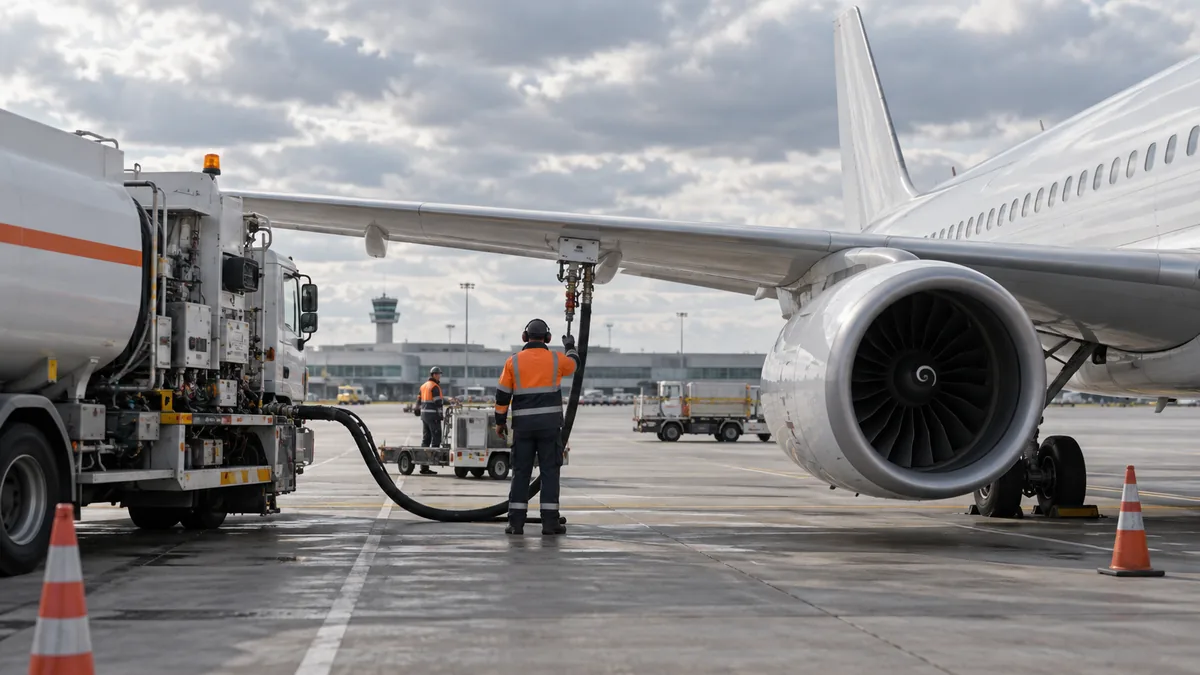
Sources checked September 7, 2026. General information, not a legal opinion on an individual claim. The hero is an illustrative AI-generated image, not a photograph of an actual claimant or incident.
Related travel tools
Optional partner links matched to this guide. FlyClaimer may earn a commission, but these links do not change our passenger-rights guidance.

We may earn a commission. Disclosure