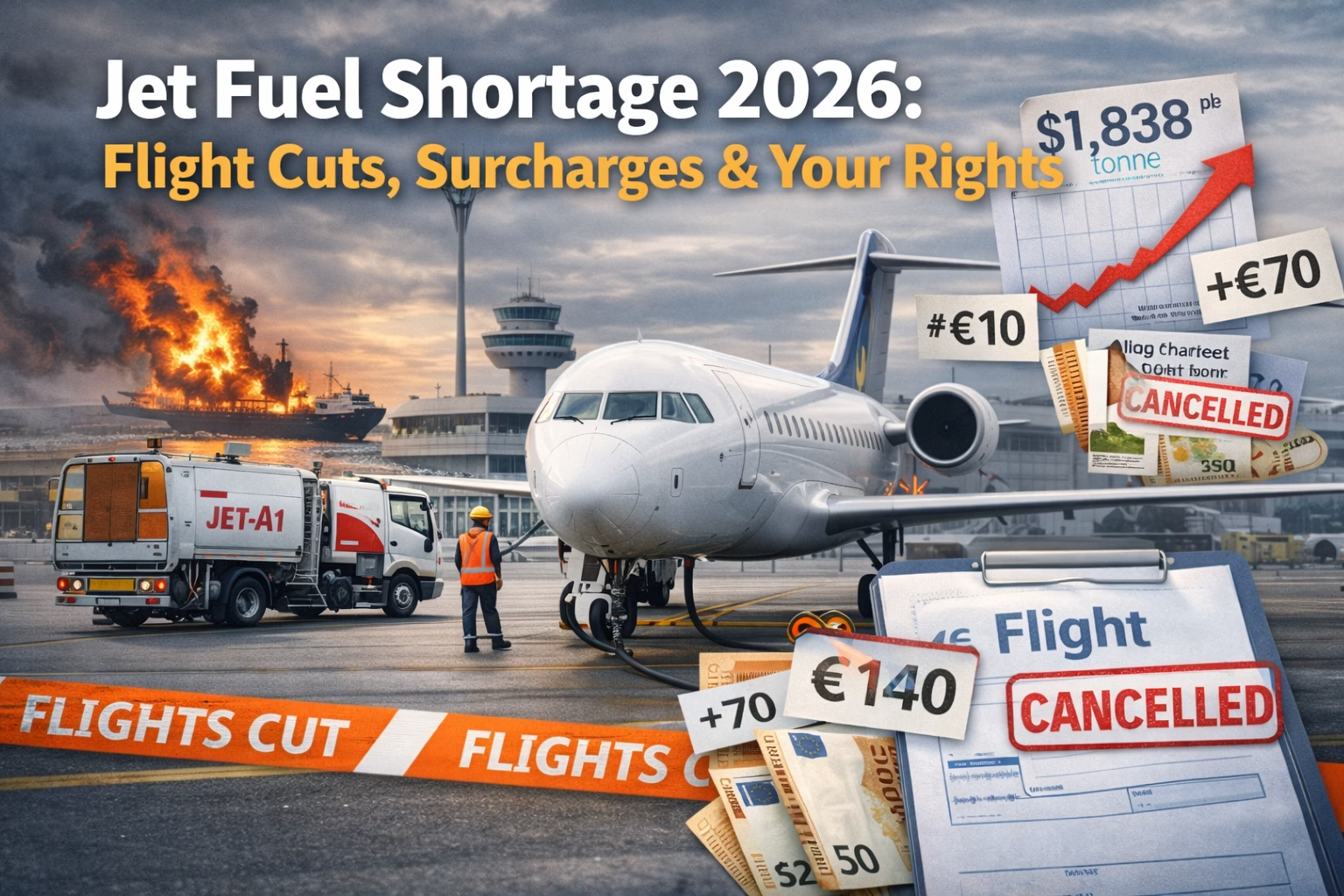
Jet Fuel Shortage 2026: Flight Cuts, Surcharges & Your Rights
Urgent Summer 2026 Update
Jet fuel costs are rising fast across Europe. If you are seeing warnings about route cuts, surcharges, or last-minute schedule changes, this guide explains what is happening, which passenger rights still apply, and when a cancellation may still lead to compensation.
Why the 2026 Jet Fuel Shortage Matters to Passengers
The current fuel shock is no longer just an airline finance story. It is becoming a passenger-rights story. As supply routes through the Strait of Hormuz have been disrupted, airlines and industry groups have warned that Europe could face flight cuts, schedule reductions, and higher operating costs heading into the summer season.
For passengers, the key point is simple: rising fuel prices do not automatically remove your rights. Airlines may try to frame disruption as part of a wider energy crisis, but under EU passenger-rights rules, the legal outcome depends on why your specific flight was cancelled or delayed, when the airline made the decision, and whether it took reasonable measures to avoid the disruption. Our air passenger rights guide and flight cancellation compensation guide explain the basic framework.
The Core Passenger-Rights Rule
If your airline cancels a flight because it has become commercially unattractive due to expensive fuel, that is generally different from a sudden airport closure, an airspace shutdown, or an immediate war-related operational ban. Commercial decisions are usually within the airline’s control. External security events may be extraordinary. Pure cost pressure usually is not.
What Is Actually Happening in Europe Right Now?
The current warning signs come from both industry and airlines. Europe remains heavily dependent on imported jet fuel, much of it normally flowing from or through the Middle East. That makes the region unusually sensitive when shipping routes tighten or insurers, refiners, and suppliers start pricing in geopolitical risk.
At airline level, the danger for passengers is not just a dramatic one-day shutdown. It is the slower wave of practical disruption: trimmed schedules, merged frequencies, route suspensions, last-minute aircraft substitutions, and higher fees passed on to travellers. Once airlines begin protecting margins, weaker routes and non-essential frequencies are usually the first to come under pressure.
That matters because passengers then face a messy mix of schedule changes, involuntary reroutings, rebookings via other hubs, and voucher offers. If that happens to you, do not assume the airline’s first explanation is the final legal answer. Read our voucher vs cash compensation guide before accepting travel credit in place of your rights.
Which Flights Are Most Exposed?
The most exposed flights are not necessarily the longest ones. In practice, airlines are more likely to review routes where margins are already thin, competition is heavy, and passengers can be consolidated onto other services. That means short-haul and medium-haul European routes with multiple daily frequencies may be particularly vulnerable to schedule trimming. Airlines may also reduce less profitable leisure frequencies, seasonal routes, or flights from secondary airports.
Passengers connecting via major hubs should also pay attention. When airlines start adjusting schedules to protect fuel, aircraft utilisation becomes tighter and missed connections can rise. If you are travelling this summer, it is worth checking our Summer 2026 Flight Disruptions List and Flight Delay Evidence Checklist before departure.
Practical Tip
If your airline quietly changes your departure time by several hours or swaps you onto a much less convenient itinerary, take screenshots of the original booking, the revised schedule, and any messages mentioning fuel, operational reasons, or network changes. Those details can matter later when assessing compensation.
Can You Claim EU261 Compensation for a Fuel-Related Cancellation?
Sometimes yes, sometimes no. The legal distinction is not whether the disruption involved fuel. The real question is whether the cancellation was caused by an event outside the airline’s actual control and whether it could have been avoided with reasonable measures.
You are more likely to have a compensation claim where the airline cancels because:
- the route is no longer profitable after fuel prices spike;
- the airline chooses to consolidate passengers onto fewer flights;
- it reduces frequency to protect margins or aircraft availability;
- it adds surcharges or schedule changes for commercial reasons rather than an immediate safety or legal restriction.
You are less likely to have a compensation claim where the disruption is directly tied to:
- government-imposed airspace closures;
- war-related security restrictions;
- sudden airport fuel-supply failure outside the airline’s operational control;
- binding regulatory restrictions that make the flight impossible to operate.
Even where compensation is not payable, you still usually retain rights to refund or rerouting, plus care obligations in some cases. That is why it is important not to confuse “no compensation” with “no rights at all.”
Important Distinction
A fuel surcharge on its own does not create a compensation claim. But if the airline cancels your flight, substantially changes your itinerary, or reroutes you so late that you arrive much later than planned, that is where your rights analysis begins.
When Fuel Disruption Is Probably an Extraordinary Circumstance
There are scenarios where airlines are likely to rely on the extraordinary-circumstances defence, and sometimes they may be right. If a conflict directly closes airspace, blocks delivery routes, creates a sudden and documented fuel shortage at a specific airport, or triggers formal restrictions from authorities, those are much stronger candidates for extraordinary circumstances than “fuel got expensive.”
In other words, the same broader crisis can produce different legal outcomes depending on the facts. A last-minute cancellation because the airport cannot supply fuel is very different from an airline cutting your flight weeks in advance because it wants to reduce exposure to high operating costs. If you need the legal background, see our guide to what airlines can and cannot call extraordinary circumstances.
What You Should Do If Your Airline Cancels Because of “Operational Reasons”
Many airlines do not say “fuel shortage” clearly in the first message. Instead, you may receive vague wording such as “operational reasons,” “network adjustment,” “schedule optimisation,” or “extraordinary disruption.” Treat those labels with caution. Ask for written confirmation of the reason, save the notification, and keep records of any rerouting offered.
Then check:
- how much notice the airline gave you;
- whether the rerouting arrives close to your original time;
- whether the operating carrier is EU/UK-based and whether the route falls under EU261 or UK261;
- whether the disruption looks like a commercial decision rather than an unavoidable external shutdown.
If your trip starts in the EU, or is operated into the EU by an EU carrier, your claim may still be strong. If your route falls under the ECAA regime, our ECAA compensation guide is also worth checking.
Flight Cancelled or Heavily Changed?
Do not guess whether “fuel disruption” removes your rights. Check the real legal position based on your route, airline, and the reason given for the cancellation.
FAQ
Does a jet fuel price spike automatically count as an extraordinary circumstance?
No. A price spike by itself is usually an economic problem, not an automatic legal defence. The airline still needs to show that the disruption was caused by events outside its control and could not have been avoided by reasonable measures.
If my airline adds a fuel surcharge, can I claim compensation?
Not just because of the surcharge. Compensation usually depends on cancellation, denied boarding, or a qualifying long delay, not on the ticket becoming more expensive.
What if my airline cancels a route because fuel has become too expensive?
That can still leave room for an EU261 claim, especially if the cancellation is essentially a commercial decision rather than the direct result of a sudden external restriction. Refund and rerouting rights remain central either way.