Free Cabin Bags & Seat Selection Reform in the EU
EU Free Cabin Bag and Seat Selection Rules 2026: What Passengers Need to Know
The European Parliament has voted overwhelmingly in favor of new rules that would guarantee every airline passenger the right to carry both a personal item and a piece of hand luggage on board — free of charge. The same vote endorsed free seat selection for passengers travelling with children under 14 or accompanying someone with reduced mobility.
If these provisions survive negotiations with the European Council and become law, they will fundamentally change how budget airlines operate in Europe. Here is what was voted on, what it means for you, and what still needs to happen.
What the European Parliament Voted For
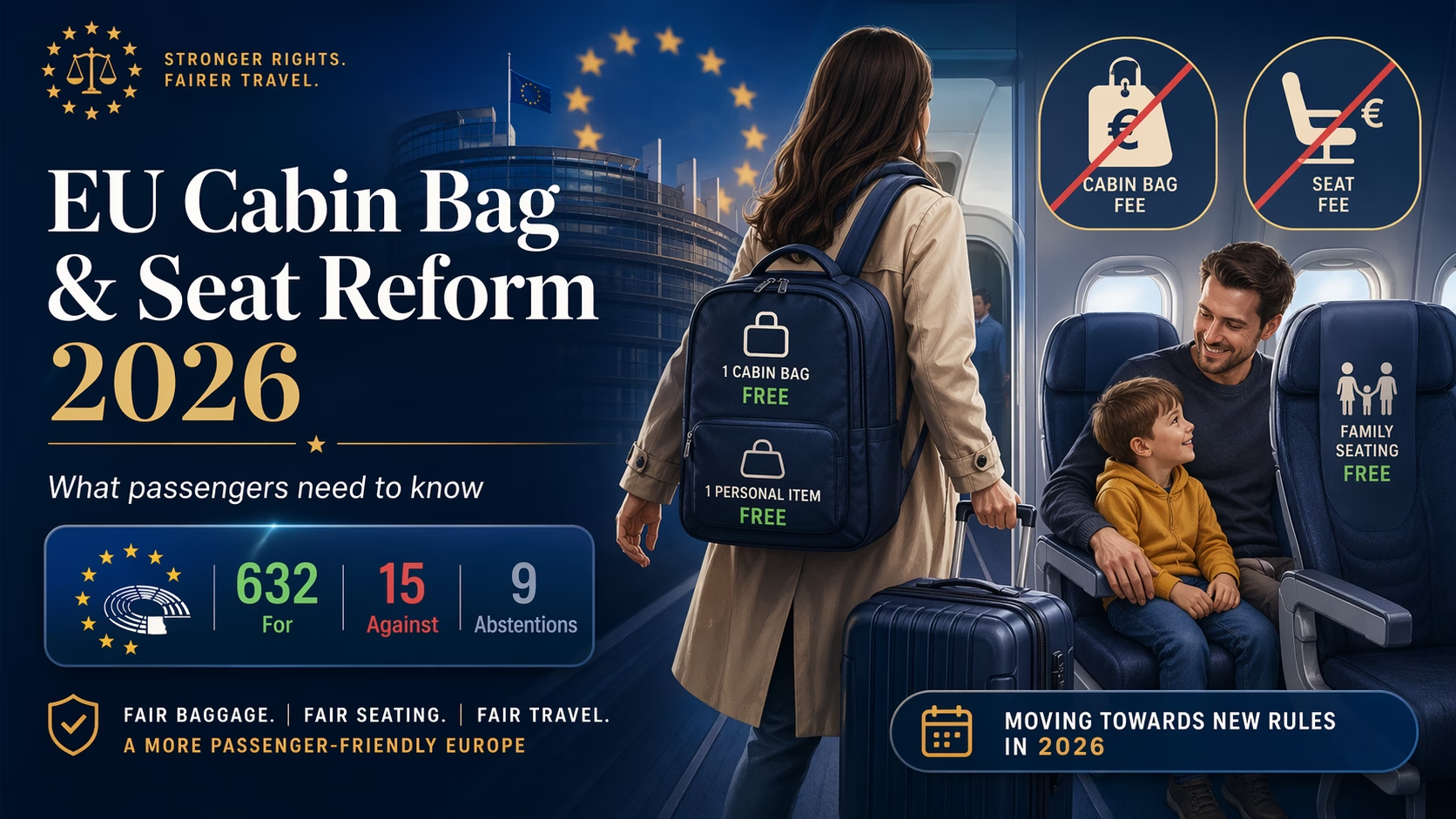
In January 2026, the European Parliament adopted its position on the long-awaited reform of EU air passenger rights (Regulation 261/2004). The vote passed with a massive majority:
Among the most passenger-friendly provisions were two that directly target airline ancillary fee practices:
Free cabin luggage. Under the Parliament’s proposal, every passenger on a European flight would be entitled to carry both a personal bag (like a backpack or purse) and one piece of hand luggage (like a standard cabin bag) into the aircraft cabin at no extra cost. This directly challenges the pricing models of carriers like Ryanair, Wizz Air, and easyJet, which currently charge €6 to €40+ for overhead cabin bag access on many fare types.
Free seat selection for families and passengers with reduced mobility. Airlines would be required to offer free seat selection to passengers traveling with children under the age of 14 and to those accompanying individuals with reduced mobility. No more paying €5 to €15 per seat just to sit next to your child on a 2-hour flight.
Why This Matters for Budget Airline Passengers
Cabin bag fees and seat selection charges are among the most profitable ancillary revenue streams for low-cost carriers. For passengers flying on basic fares with airlines like Ryanair, Wizz Air, or easyJet, these fees can add €20 to €60 per passenger per flight — sometimes doubling the headline fare.
The Parliament’s position is clear: a basic cabin bag in the overhead bin is part of the air transport service, not an optional extra. The same logic applies to sitting with your own child — it should not be a premium product.
Consumer groups have broadly welcomed the vote. The European consumer organization BEUC has been among the most vocal supporters, arguing that the current fee structure exploits passengers who have no realistic alternative to flying on certain routes.
What the Airlines Are Saying
The reaction from the airline industry has been sharply negative. IATA, the global airline trade body, has warned that the Parliament’s proposals would increase costs for all passengers — even those who do not currently buy these extras.
The core argument is economic. Airlines say that if they can no longer charge for cabin bags or family seating, those costs will be absorbed into base ticket prices, meaning everyone pays more — including solo travelers who only bring a small personal item and do not need seat selection.
IATA’s Director General has described the proposals as imposing services that passengers have not asked for and do not want to pay for. The airline industry’s preferred outcome is the European Council’s more conservative position, which did not include the cabin bag or seat selection provisions.
Where Things Stand: Parliament vs. Council
This is where it gets complicated. The European Parliament and the European Council — which represents the 27 EU member state governments — have adopted significantly different positions on the reform:
🟢 Parliament Position
- Free cabin bag + personal item guaranteed
- Free seat selection for families (children <14)
- Keep 3-hour delay compensation threshold
- Compensation: €250–€600 (current levels)
- Care and assistance after 2 hours
- Pre-filled compensation forms required
🟠 Council Position
- No cabin bag provision
- No seat selection provision
- Raise threshold to 4–6 hours
- Reduce max compensation to €500
- Higher thresholds for care
- More airline-friendly definitions
Since the two institutions disagree, the proposals now move to a conciliation process. A conciliation committee will attempt to reach a compromise. The final text must be agreed by both the Parliament and the Council before it becomes law.
This means the free cabin bag and seat selection rules are not yet in effect. They are part of the Parliament’s negotiating position, and the final outcome could look different.
What This Means for Flights from the Western Balkans
If the cabin bag and seat selection reforms do become EU law, they would apply to all flights departing from EU airports. For passengers in the Western Balkans, the picture depends on how the ECAA agreement incorporates the changes.
Countries in the European Common Aviation Area — including Albania, Serbia, Kosovo, North Macedonia, Montenegro, and Bosnia and Herzegovina — generally align their aviation regulations with EU standards. If the reformed EU 261 is adopted, ECAA compensation rules are likely to be updated to reflect the new provisions, though implementation timelines may vary.
In the meantime, existing air passenger rights under the current EU 261/2004 and ECAA framework remain fully in force. Your right to flight delay compensation and flight cancellation compensation has not changed.
What You Can Do Right Now
Know the current rules. Even before any reform takes effect, you have strong rights under EU 261/2004 and ECAA regulations. If your flight is delayed by 3+ hours, cancelled at short notice, or you are denied boarding, you may be entitled to up to €600 per person.
Do not overpay for seats you are entitled to. Some airlines are already required under existing regulations to make reasonable efforts to seat children with their parents. If an airline separates you from your young child and charges extra to fix it, document the situation — it may support a complaint.
Stay informed. The EU legislative process can move slowly, but when it does produce new rules, they can take effect relatively quickly. We will update this guide as the conciliation process progresses.
Check your past flights. If you have experienced a delay or cancellation in the past 3 years, you may still be able to claim.
FlyClaimer provides informational guides on passenger rights. We do not offer legal advice. For specific claims, use our free eligibility checker or consult a professional.
FAQ
Will cabin bags become free on Ryanair, Wizz Air, and easyJet in 2026?
Not yet. The European Parliament has backed a rule that would allow passengers to bring one personal item and one small cabin bag for free, but that proposal still has to be negotiated with the European Council before it becomes law. Until then, airlines can keep charging under their current baggage policies.
When do the new EU free cabin bag rules start?
There is no confirmed start date yet. The January 2026 Parliament vote was a major step, but the final law has not been agreed, so passengers should assume current airline baggage rules still apply for now.
What size cabin bag would be free under the EU proposal?
The proposal supports one personal item plus one small piece of hand luggage free of charge. Earlier Parliament committee wording pointed to a personal item up to 40 x 30 x 15 cm and a small hand luggage allowance up to 100 cm total dimensions and 7 kg, though the final law could still change during negotiations