Is the Boeing 737 MAX Safe in 2026? A Simple Guide for Travelers
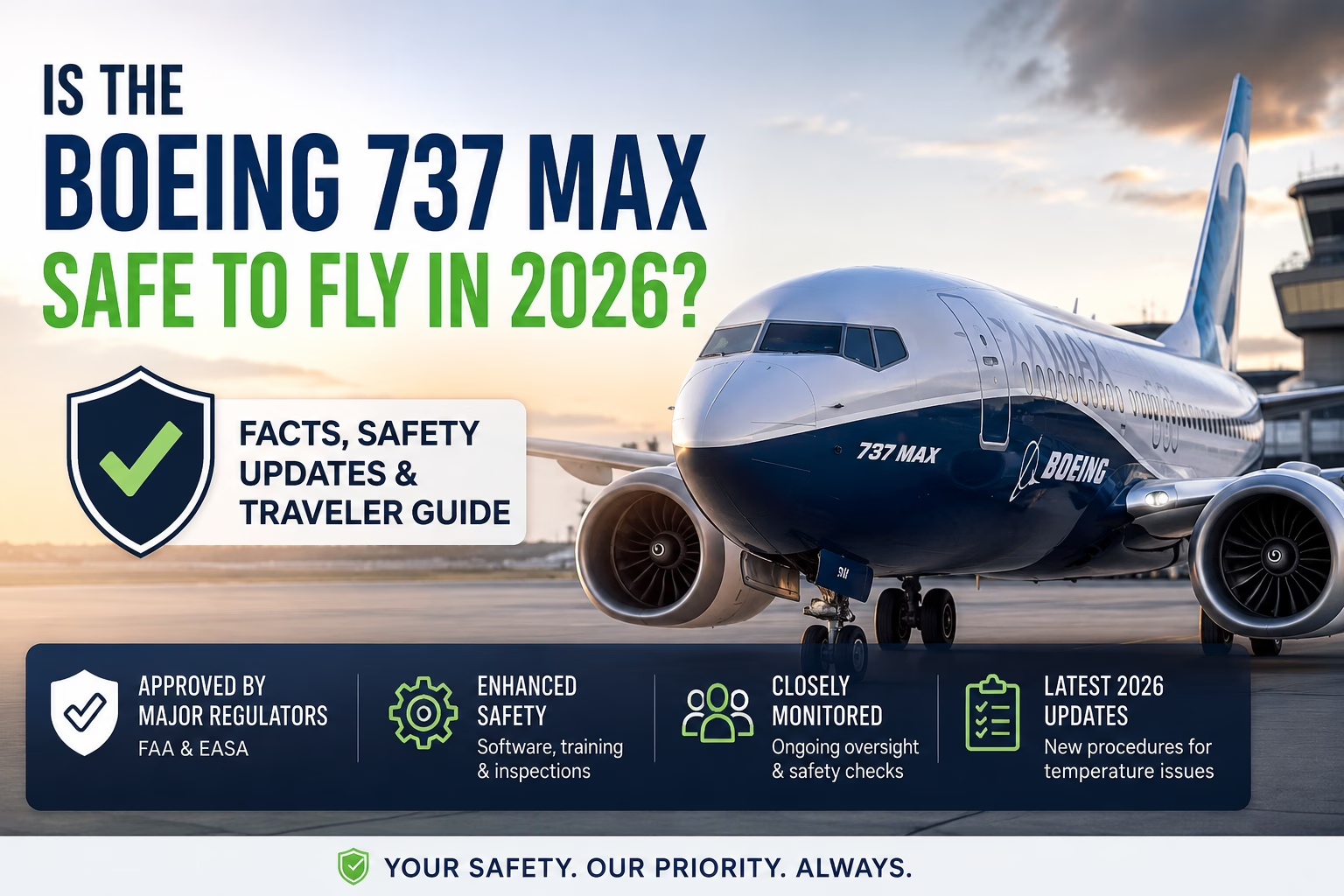
Is the Boeing 737 MAX Safe to Fly in 2026?
Recent aviation headlines have made many travelers nervous about flying on the Boeing 737 MAX. Here is what changed after the crashes, why the aircraft is still under scrutiny, and what passengers should know before boarding.
Why Are People Still Talking About the Boeing 737 MAX?
If you have seen recent aviation headlines and wondered whether it is safe to fly on a Boeing 737 MAX, you are not alone. Many travelers are asking the same question before booking or boarding their flights.
The Boeing 737 MAX became one of the most discussed aircraft in the world after two fatal crashes in 2018 and 2019. Since then, aviation regulators required major changes before allowing the aircraft to return to commercial service.
Those changes included software updates, wiring modifications, new pilot training requirements, and additional safety checks. European aviation regulator EASA also confirmed that pilot training and system testing were part of the aircraft’s return-to-service conditions.
So, Is the Boeing 737 MAX Safe to Fly in 2026?
Yes. The Boeing 737 MAX is approved to fly by major aviation regulators, including the FAA and EASA. Airlines are not allowed to operate an aircraft unless it meets strict safety requirements.
However, “safe to fly” does not mean the aircraft is free from scrutiny. The 737 MAX remains closely watched by regulators, airlines, pilots, and passengers because of its history and Boeing’s ongoing quality-control issues.
In practical terms, if your airline is operating a Boeing 737 MAX, the aircraft has passed the required regulatory and airline safety checks. But it is also understandable if travelers want to know more before flying.
What Changed After the 737 MAX Crashes?
After the crashes, regulators required several important safety updates before the aircraft could return to service.
Software updates
The aircraft’s flight-control software was changed to address issues connected to the Maneuvering Characteristics Augmentation System, known as MCAS.
Pilot training updates
Pilots received additional training before flying the 737 MAX again. This included updated procedures and simulator-based training in many regions.
Aircraft inspections
Aircraft had to go through checks before returning to passenger service. Airlines also follow ongoing maintenance and inspection schedules.
Stronger regulatory oversight
The 737 MAX is still under close observation from aviation authorities, especially in the United States and Europe.
What Are the Latest 737 MAX Concerns in 2026?
One recent concern involved a circuit breaker issue linked to excessive cabin and cockpit temperatures on some Boeing 737 MAX aircraft. The FAA issued an airworthiness directive requiring operators to revise flight manuals and add new crew procedures.
This does not mean all 737 MAX aircraft are unsafe. It means regulators identified a potential risk and required airlines to follow updated safety instructions.
For travelers, this is important because aviation safety often works through prevention. Regulators do not wait for a serious accident before requiring changes when a risk is found.
Approved to Fly vs. Still Under Scrutiny
What supports passenger confidence
- The aircraft is approved by major aviation regulators.
- Software updates were required before return to service.
- Pilot training requirements were updated.
- Airlines must follow maintenance and inspection schedules.
- Regulators can issue new directives when risks are identified.
Why scrutiny continues
- The aircraft has a serious history from 2018 and 2019.
- Boeing continues to face quality-control concerns.
- New FAA directives may still affect procedures.
- Passengers remain sensitive to aircraft-type changes.
- The 737 MAX remains one of the most closely watched aircraft.
How Can You Check If Your Flight Uses a Boeing 737 MAX?
If you want to know what aircraft you are flying on, you can usually check before departure.
- Look at the aircraft type during the booking process.
- Check your airline’s website or mobile app.
- Use flight tracking websites such as FlightRadar24 or FlightAware.
- Search your flight number online before departure.
Common names you may see include Boeing 737 MAX 8, Boeing 737 MAX 9, Boeing 737-8, Boeing 737-9, or 737-8200.
Keep in mind that aircraft types can change before departure for operational reasons. Airlines sometimes swap aircraft due to scheduling, maintenance, or availability.
Can You Refuse to Fly on a Boeing 737 MAX?
In most cases, passengers cannot automatically claim a free refund simply because they do not want to fly on a specific aircraft type. If the airline operates the flight as scheduled, standard ticket rules usually apply.
However, if the airline cancels your flight, significantly delays it, denies boarding, or changes your travel plans, you may have rights depending on the route, airline, and reason for the disruption.
What If Your Boeing 737 MAX Flight Is Delayed or Cancelled?
If your flight is delayed or cancelled, the aircraft type itself is not always the deciding factor for compensation. What matters is the reason for the disruption, the length of the delay, your route, and whether the airline could have avoided the problem.
Under EU Regulation 261/2004, passengers may be eligible for compensation of up to €600 if their flight is delayed by more than three hours, cancelled at short notice, or affected by denied boarding, depending on the circumstances.
Technical problems are often considered the airline’s responsibility unless they are caused by extraordinary circumstances. This means travelers should not automatically assume they have no rights after a disruption.
Passenger Rights: When Compensation May Apply
| Scenario | What it may mean | Compensation outlook |
|---|---|---|
| Your flight operates normally | The aircraft type alone usually does not create a compensation right. | Usually no claim |
| Your flight is delayed by more than 3 hours | You may have rights if the airline was responsible for the delay. | Possible claim |
| Your flight is cancelled at short notice | Compensation may apply depending on notice period, route, and reason. | Case-by-case |
| The airline cites a technical issue | Many technical problems are treated as the airline’s responsibility unless extraordinary circumstances apply. | Often claimable |
| You simply do not want to fly on the aircraft type | Passenger preference alone usually does not trigger a free refund or compensation. | Usually not claimable |
Should Travelers Be Worried?
It is normal to feel concerned when an aircraft appears in the news repeatedly. But aviation safety is built around strict checks, multiple backup systems, pilot training, and regulator oversight.
The Boeing 737 MAX is approved to fly, but it remains one of the most closely watched aircraft in the world. For many travelers, the best approach is to stay informed without panic.
If your flight operates normally, there may be nothing you need to do. But if your flight is delayed, cancelled, or disrupted, you should check your passenger rights before accepting the situation.
- Check your aircraft type before departure.
- Monitor your flight status on the airline app.
- Keep your boarding pass and booking confirmation.
- Save delay or cancellation notifications.
- Ask the airline for the official reason for the disruption.
- Check if you are eligible for compensation.
Final Answer: Is the Boeing 737 MAX Safe in 2026?
The Boeing 737 MAX is approved for commercial flights in 2026 and is operating with airlines around the world. Regulators have required safety updates, pilot training changes, and ongoing procedures to reduce risk.
At the same time, passengers are right to ask questions. Boeing’s recent safety headlines and FAA directives show that the aircraft remains under close attention.
For travelers, the most important thing is to stay informed, check your flight details, and know your rights if something goes wrong.
Was Your Flight Delayed or Cancelled?
If your flight was delayed, cancelled, or disrupted, you may be entitled to compensation of up to €600 under EU passenger rights rules. FlyClaimer helps passengers check their eligibility quickly and claim compensation from airlines.
Free eligibility check · No win, no fee · Takes under 2 minutes