Extraordinary Circumstances Full List 2026
Published: April 18, 2026 · Last updated: April 18, 2026
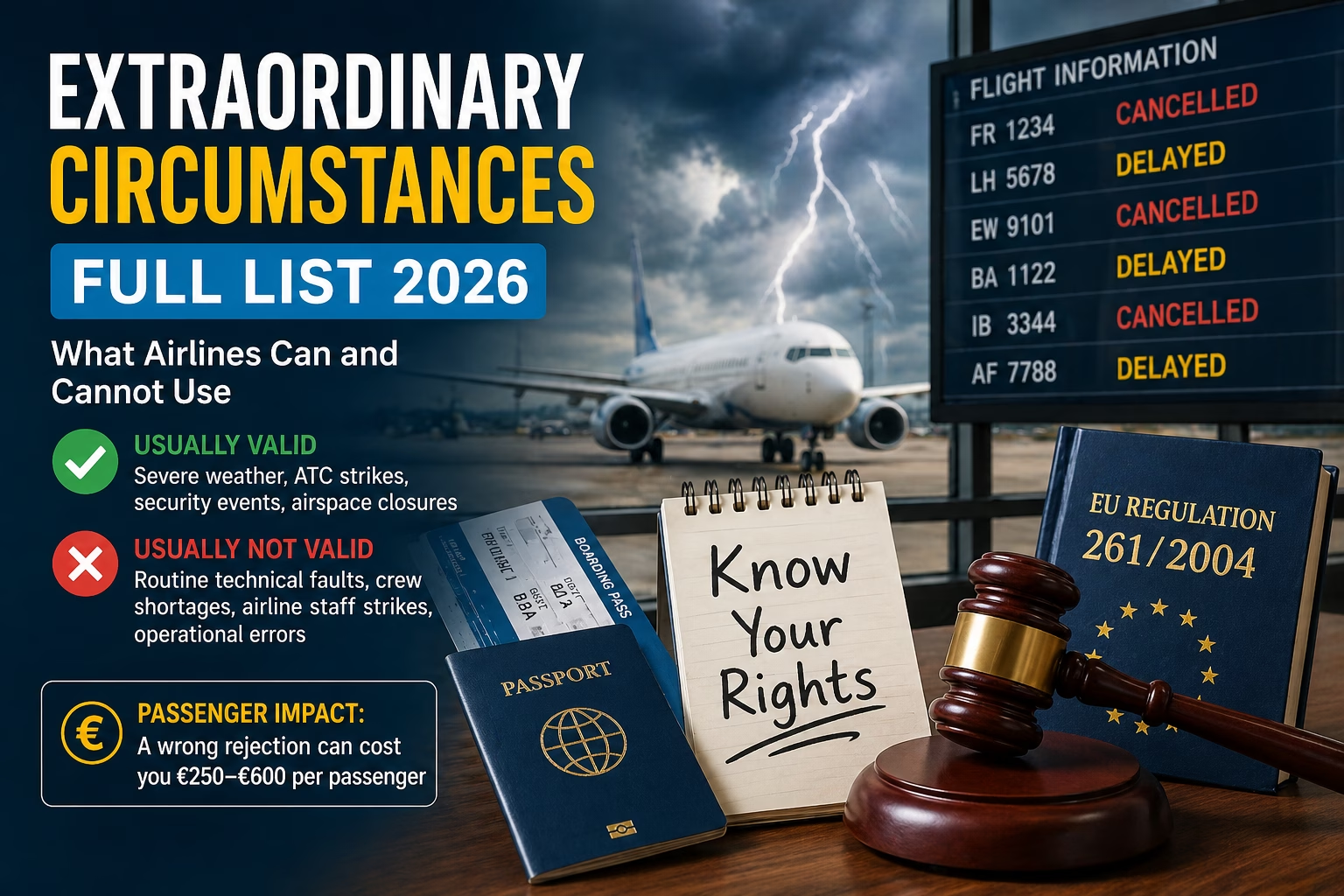
⚠️ EXTRAORDINARY CIRCUMSTANCES — What Airlines Can and Cannot Use
Main point: Airlines often cite “extraordinary circumstances” to reject valid claims.
Usually valid: severe weather · ATC strikes · security events · airspace closures
Usually not valid: routine technical faults · crew shortages · airline staff strikes · operational errors
Passenger impact: A wrong rejection can cost you €250–€600 per passenger
When your flight is cancelled or delayed, the airline’s first line of defence is almost always the same: “extraordinary circumstances.” Under EU Regulation 261/2004, airlines do not have to pay compensation if the disruption was caused by events genuinely outside their control. But that defence is far narrower than most airlines would like passengers to believe.
This guide explains what qualifies as an extraordinary circumstance, what does not, and what to do if an airline rejects your claim using vague wording such as “weather,” “operational reasons,” or “technical issue.”
What Are Extraordinary Circumstances?
EU Regulation 261/2004 says airlines are exempt from paying compensation only if they can prove the disruption was caused by extraordinary circumstances “which could not have been avoided even if all reasonable measures had been taken.”
Two conditions must both be met:
- The event must be genuinely outside the airline’s normal sphere of activity. Internal operational problems such as staffing, maintenance, scheduling, aircraft rotation, and routine technical issues usually do not qualify.
- The airline must show it took all reasonable steps to avoid or reduce the disruption. Even if something extraordinary happened, the airline still has to show it acted reasonably.
The burden of proof is on the airline. You do not need to prove the disruption was within the airline’s control. The airline must prove that it was not.
Why this matters
Airlines reject valid claims every day by citing extraordinary circumstances that do not actually qualify. Knowing the difference can be worth €250–€600 per passenger.
The Full List: What Counts and What Does Not
This table gives a quick overview. Detailed explanations follow below.
| Situation | Extraordinary? |
|---|---|
| Severe weather such as hurricanes, volcanic ash, or heavy snow closing runways | Usually yes |
| Routine bad weather such as rain, fog, or moderate wind | Usually no |
| Air traffic control strike | Usually yes |
| Airline’s own pilot or cabin crew strike | Usually no |
| Airport security staff strike | Usually yes |
| Ground handling strike | Depends |
| Standard technical or mechanical fault | Usually no |
| Hidden manufacturing defect | Usually yes |
| Routine crew sickness or staffing gap | Usually no |
| Sudden medical emergency affecting crew mid-flight | Depends |
| Bird strike | Usually yes |
| Security threat, bomb scare, or airspace closure | Usually yes |
| Late inbound aircraft or knock-on delay | Usually no |
| Overbooking or operational scheduling error | No |
Weather
Severe weather is usually extraordinary. Volcanic eruptions, hurricanes, heavy snowstorms that close runways, and thunderstorms that make flight unsafe are generally accepted as extraordinary circumstances.
Routine bad weather is not automatically extraordinary. Airlines operate in rain, fog, moderate wind, and cold temperatures every day. If conditions were normal for the airport and season, or other airlines operated normally, the weather defence becomes much weaker.
Practical tip
If the airline cites weather, check whether other flights at the same airport operated normally during the same period. If they did, the problem may have been the airline’s operational response, not the weather itself.
Strikes
The key question is: who is striking?
Strikes by the airline’s own staff are generally not extraordinary. Managing employee relations, wages, rosters, and union negotiations is part of running an airline. This applies to airline pilots, cabin crew, and in many cases internal ground staff.
Strikes by external parties are usually extraordinary. Air traffic controllers, airport security, customs, and border control staff are not employed by the airline. When those groups strike, the airline usually cannot control the outcome.
Ground handling strikes can be a grey area. If the airline directly employs the staff, the defence is weaker. If the work is handled by an independent contractor, the airline may have a stronger argument, but it must still prove it took reasonable steps to reduce the disruption.
For recent examples, see the Lufthansa strike guide, the Eurowings strike guide, and the Spain ATC strike guide.
Technical and Mechanical Faults
Standard technical faults are not extraordinary. Aircraft maintenance is the airline’s responsibility. Engine faults, hydraulic problems, landing gear issues, software problems, and normal mechanical failures are usually part of the inherent risk of running an airline.
Hidden manufacturing defects may qualify. If a defect was genuinely hidden, undetectable through standard maintenance, and introduced by the aircraft manufacturer, courts may treat it differently. But this is a high bar.
Wear and tear is not extraordinary. Airlines are expected to inspect, maintain, and replace parts before they fail.
Crew Sickness and Staffing Issues
Routine crew sickness is not usually extraordinary. Employees get sick predictably. Airlines are expected to maintain standby crew to cover normal illness and roster gaps.
A sudden medical emergency may qualify in narrow cases. If a pilot or crew member suffers an emergency mid-flight and the aircraft must divert, that event may be extraordinary. But the airline must still show it took reasonable steps afterwards.
Crew duty-time limits are not usually extraordinary. If an earlier delay pushes crew beyond legal hours and the airline has no replacement crew, that is usually an operational planning problem.
For more detail, see our guide on crew sickness and extraordinary circumstances.
Air Traffic Control and Airport Operations
ATC restrictions, ATC strikes, and airspace closures are usually extraordinary. Airlines cannot control air traffic management decisions.
Airport congestion and slot restrictions depend on the facts. Emergency runway closures may qualify. Ordinary congestion at a busy airport is less convincing, especially if it was predictable.
De-icing delays are not automatically extraordinary. Winter operations require planning. If de-icing caused a delay because the airline did not allow enough time or capacity, compensation may still apply.
Security, Political, and Health Events
Security threats are extraordinary. Bomb threats, terrorist incidents, and security alerts that close airports or ground aircraft are genuinely outside airline control.
Airspace closures caused by war or political instability are usually extraordinary. Airlines cannot reasonably be blamed for conflict-zone restrictions or government-ordered airspace closures.
Pandemics and government travel restrictions are generally extraordinary. But once restrictions are lifted and normal operations resume, airlines cannot keep relying on a pandemic defence indefinitely.
Bird Strikes and Wildlife
Bird strikes are usually extraordinary. A bird hitting the engine or airframe is normally treated as an unforeseeable external event.
However, context matters. If an airport is known for recurring bird activity and preventive measures were poor, the facts may need closer review.
Think the Airline Can Refuse?
Airlines reject valid claims every day by citing extraordinary circumstances that do not actually qualify. Check whether your flight may still be eligible.
The Airline Must Prove It — Not You
This is the most important principle in an extraordinary circumstances dispute. The airline must provide evidence that:
- The specific disruption was caused by a genuine extraordinary event
- The event directly caused your delay or cancellation
- The airline took all reasonable measures to avoid or reduce the disruption
A rejection letter saying only “extraordinary circumstances beyond our control” is not enough. Ask what happened, when it happened, and what the airline did to avoid the disruption.
Common Airline Rejection Tactics
“Operational reasons.” This phrase is not a legal defence. It sounds official, but it does not explain anything. Ask for the specific cause.
“Weather at a previous airport.” Airlines often blame a late inbound aircraft. Even if weather affected an earlier flight, the airline still has to show it managed the knock-on delay reasonably.
“Technical inspection required for safety.” Safety always comes first, but the need for inspection does not automatically make the underlying technical issue extraordinary.
Sending a voucher instead of a written answer. A voucher is not a valid substitute for cash compensation unless you knowingly accept it. See our voucher guide for more detail.
What to Do If the Airline Claims Extraordinary Circumstances
Do not accept the rejection at face value. Ask the airline to identify the exact event and provide evidence.
Cross-check public data. Look at weather reports, airport disruption notices, and flight tracking data from services such as FlightAware.
Escalate if the airline refuses to explain. If the airline repeats vague wording without details, you can escalate to the National Enforcement Body of the departure country or use a claims service.
Is crew sickness an extraordinary circumstance?
In most cases, no. Airlines are expected to maintain standby crew. Sudden medical emergencies may qualify only in narrow circumstances.
FAQ
What does “extraordinary circumstances” mean under EU261?
It means events genuinely outside the airline's normal operations that could not have been avoided even if all reasonable measures had been taken. The airline must prove both parts.
Is bad weather always an extraordinary circumstance?
It means events genuinely outside the airline's normal operations that could not have been avoided even if all reasonable measures had been taken. The airline must prove both parts.
Is a technical fault an extraordinary circumstance?
Almost never. Standard mechanical failures are part of normal airline operations. Only genuinely hidden manufacturing defects may qualify.
Is an airline staff strike an extraordinary circumstance?
Generally, no. Strikes by an airline's own pilots, cabin crew, or ground staff are usually internal matters. External strikes by ATC or airport security are more likely to qualify.
Who decides if circumstances are extraordinary?
Ultimately, courts decide. National enforcement bodies also assess claims, and CJEU case law guides EU member states.
The airline rejected my claim citing extraordinary circumstances. What should I do?
Ask for specific evidence, cross-check public data, and escalate if the airline cannot justify the rejection