
Turkey Flight Cancellations 2026: Why Are So Many Flights Cancelled?
Turkey Flight Cancellations 2026: Why Are So Many Flights Cancelled?
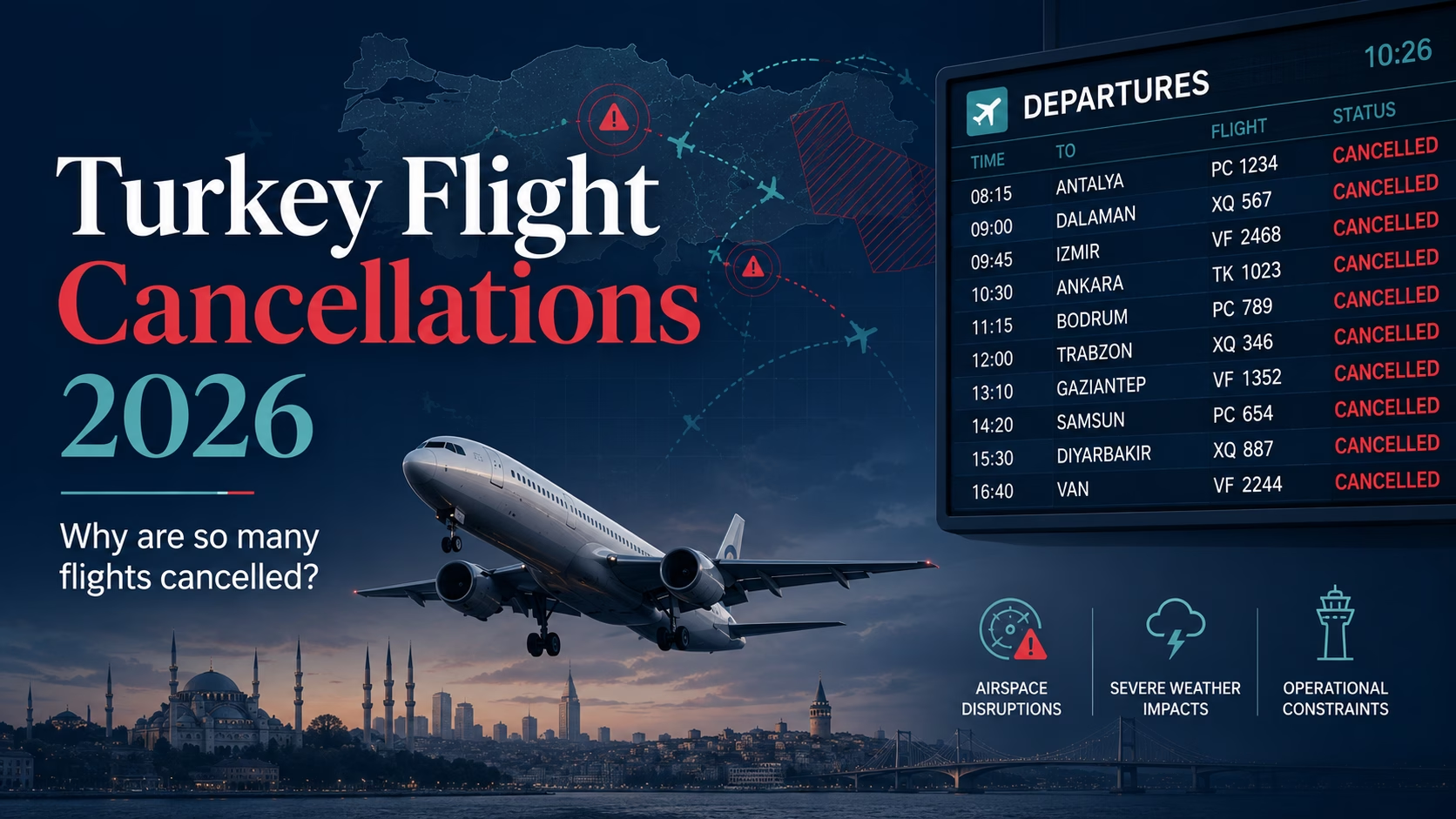
Many passengers are seeing cancellations, delays and schedule changes on Turkey-related flights. The biggest pressure points are Middle East airspace restrictions, regional security disruption and wider airline capacity cuts linked to fuel costs.
What Is Happening With Flights in Turkey?
Turkey has become a major connection point between Europe, Asia and the Middle East. When airspace restrictions or regional security issues affect nearby countries, Turkish airports and Turkey-based airlines can feel the pressure quickly.
In 2026, several flight cancellations and schedule changes have been linked to Middle East airspace restrictions, regional instability and airline network adjustments. Some routes may be cancelled completely, while others may be delayed, rerouted or moved to a different departure time.
This does not mean that Turkish airspace is fully closed or that all Turkey flights are unsafe. In many cases, the disruption is route-specific. A flight from Istanbul to a Gulf or Middle Eastern destination may be affected, while another flight from Istanbul to Europe may operate normally.
The main issue is not “Turkey is closed.” The real issue is that airlines are adjusting schedules because of nearby airspace restrictions, security risks, rerouting costs and fuel-related capacity pressure.
Main Reasons Flights Are Being Cancelled
There is usually not one single reason behind all cancellations. The exact reason depends on the airline, airport, route and date of travel. However, the current Turkey-related disruption is mainly connected to three causes.
Flights to or over certain Middle Eastern airspace may be cancelled, rerouted or delayed when airlines cannot safely operate the route.
High jet fuel costs can push airlines to remove weaker flights from schedules, reduce seats or consolidate routes.
When aircraft avoid restricted airspace, flights may take longer, require more fuel or become operationally difficult.
Which Airlines and Routes Are Most Affected?
Passengers have reported disruption on Turkey-related routes operated by airlines such as Pegasus, Turkish Airlines and AJet. The most sensitive routes are usually flights between Turkey and countries affected by regional airspace restrictions, including parts of the Middle East and Gulf region.
Pegasus has published official passenger-rights notices for flights affected by Middle East airspace restrictions. Turkish Airlines, AJet and Pegasus have also been reported in connection with temporary cancellations to several Middle Eastern destinations during periods of airspace closure.
| Route type | What may happen | Passenger risk |
|---|---|---|
| Turkey – Middle East | Cancellations, rerouting or temporary suspensions | High |
| Turkey – Gulf region | Possible cancellations or schedule changes depending on route | Medium |
| Turkey – Europe | Usually less exposed, but knock-on delays can happen | Medium |
| Domestic Turkey flights | May operate normally unless affected by aircraft rotation or weather | Lower |
A cancellation from Istanbul to Dubai, Doha, Riyadh, Beirut, Amman, Baghdad or Tehran may have a very different legal reason from a cancellation between Istanbul and London, Berlin, Rome or Tirana. The route matters.
Is This an Extraordinary Circumstance?
This is the key question for compensation.
Under EU261-style passenger rights, airlines may avoid cash compensation if they can prove the disruption was caused by extraordinary circumstances outside their control. Airspace closures, security risks, military activity and government restrictions are often treated as extraordinary circumstances.
However, airlines cannot simply use a vague excuse and reject every claim. The exact cause still matters. A genuine airspace closure is different from a commercial decision to cancel a low-profit flight because fuel costs are high or demand is weak.
Airspace closure or security restriction may reduce compensation chances. But a commercial schedule cut, operational issue or fuel-cost decision may still leave the airline responsible, depending on the facts.
Can You Get Compensation for a Cancelled Turkey Flight?
Possibly. Your compensation rights depend on several factors:
- whether your route is covered by EU261, UK261 or ECAA-style rules;
- which airline operated the flight;
- how many days before departure you were informed;
- whether you arrived late at your final destination after rerouting;
- the real reason for the cancellation;
- whether the airline could have avoided the disruption with reasonable measures.
If your flight was cancelled less than 14 days before departure, compensation may be possible. But if the airline proves the cancellation was caused by genuine airspace restrictions or security risks, cash compensation may be rejected.
If your flight is cancelled, you should normally be offered a refund or alternative transport.
For long delays, missed connections or overnight disruption, the airline may owe meals, hotel and transport.
Compensation depends on the route, notice period, delay length and whether extraordinary circumstances apply.
What If the Airline Blames Fuel Problems?
Fuel-related explanations can be complicated. A broad claim such as “fuel crisis,” “fuel costs” or “operational pressure” does not automatically remove your rights.
If the airline cancelled because high fuel prices made the route less profitable, that may be treated differently from a genuine physical fuel shortage or government-imposed restriction. Passengers should ask the airline for the exact reason in writing.
Turkey flight disruption may also connect with the wider 2026 jet fuel crisis and airline capacity cuts. Fuel pressure can lead to higher fares, fewer seats and more schedule changes.
What Should You Do If Your Turkey Flight Is Cancelled?
Check your exact flight status
Use the airline app, airport website and email/SMS notifications. Do not rely only on social media posts or screenshots from other passengers.
Save all cancellation messages
Keep emails, SMS alerts, app screenshots, airport board photos and any written explanation from the airline.
Ask for the official reason
Ask the airline to confirm whether the cancellation was caused by airspace restrictions, security issues, fuel shortage, aircraft rotation or commercial schedule changes.
Do not accept a voucher too quickly
If your flight is cancelled, you may be entitled to a cash refund. A voucher should normally be optional, not forced.
Keep receipts for extra costs
Save receipts for meals, hotel, airport transport, replacement flights and other necessary expenses caused by the disruption.
Check if compensation applies
If your flight was cancelled at short notice or arrived 3+ hours late after rerouting, your claim may still be worth checking.
Was Your Turkey Flight Cancelled?
If your Turkey flight was cancelled, delayed 3+ hours or rerouted at short notice, you may be owed up to €600 per person depending on the route and reason.
No win, no fee · EU261, UK261 and ECAA routes covered · Takes under 2 minutes
Frequently Asked Questions
Final Thoughts
The 2026 Turkey flight cancellation situation is mainly about regional disruption, not a simple closure of Turkey itself. Middle East airspace restrictions, rerouting issues and fuel-related capacity pressure can all affect flights connected with Turkey.
Passengers should not assume they have no rights. Even when compensation is disputed, cancelled flights can still trigger refund, rerouting and care rights. If the airline gives a vague explanation, it is worth checking whether compensation may still apply.
This article is for informational purposes only. FlyClaimer does not provide legal advice. Passenger rights depend on the route, airline, timing, delay length and exact reason for the disruption.