Why Are Flight Tickets So Expensive in 2026? Jet Fuel, Fewer Seats & Airline Cuts
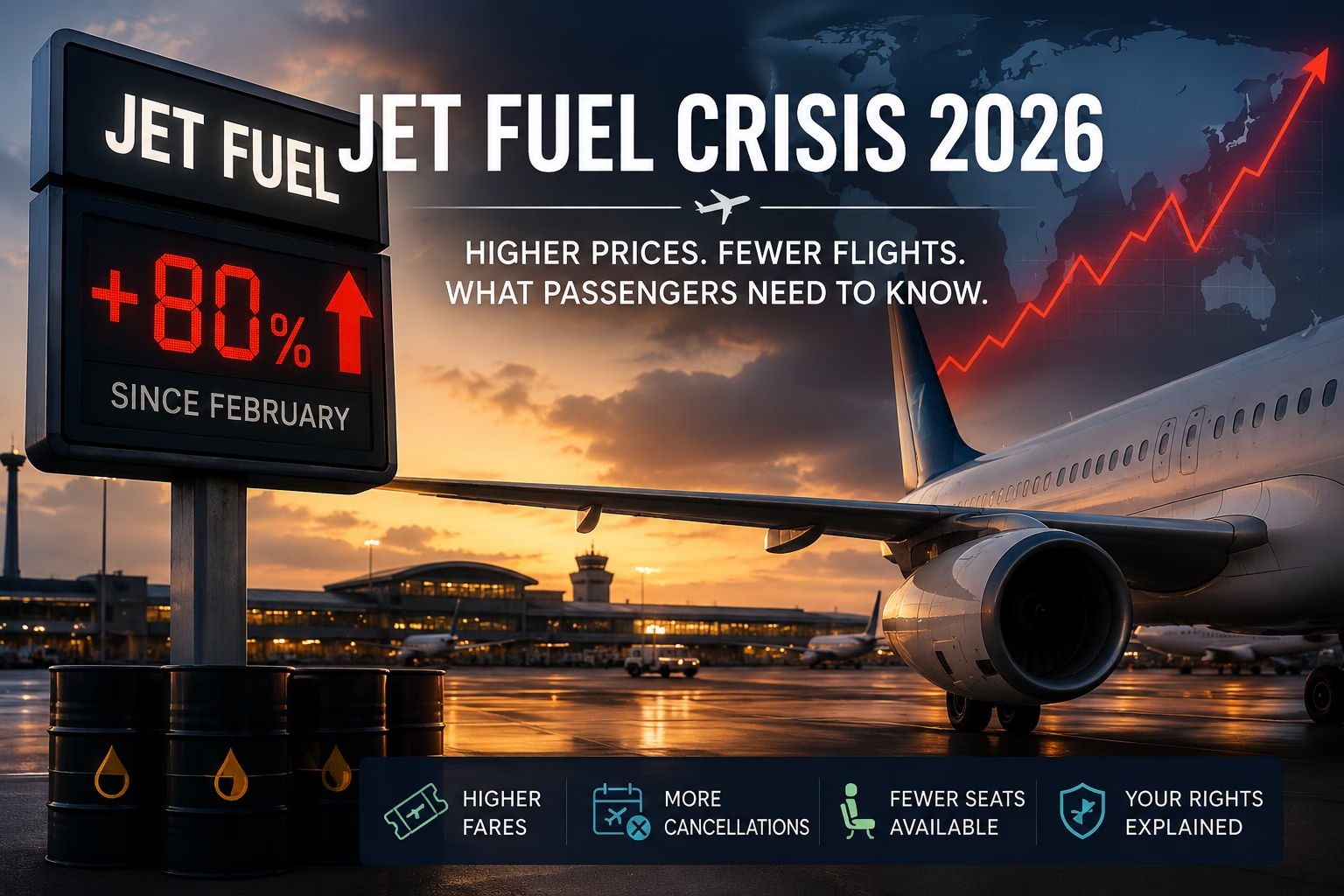
Jet Fuel Crisis 2026: Why Flight Prices Are Rising and Cancellations Could Increase
Airlines are facing one of their biggest cost shocks in years. As jet fuel prices rise sharply, passengers may see higher fares, fewer flight options and a greater risk of cancellations or major schedule changes.
What Is Happening?
The global aviation industry is facing a major pressure point as jet fuel prices rise sharply. The increase has been linked to geopolitical tensions and disruption involving the United States, Israel and Iran, creating uncertainty across energy markets and airline operations.
For airlines, fuel is not a small expense. It is one of the largest operating costs in aviation. When that cost rises quickly, airlines often respond by raising ticket prices, reducing capacity, cutting weaker routes or cancelling flights that are no longer profitable.
Passengers are likely to feel the crisis through higher fares, fewer low-cost seats, reduced route choices and more schedule changes during the summer travel period.
Why Passengers Are Already Feeling the Impact
When fuel becomes more expensive, airlines have limited options. Some carriers can absorb the pressure for a while, especially if they have strong cash reserves or fuel-hedging protection. Smaller and low-cost airlines usually have less room to move.
That is why the impact is not only financial. It can quickly become operational. Routes with weaker demand may be reduced. Flights with poor margins may be removed. Passengers who booked early may later receive schedule-change emails, rerouting offers or cancellation notices.
Airlines often pass part of the fuel cost increase to passengers through higher fares or fuel surcharges.
If airlines remove seats from schedules, demand stays high while supply becomes tighter.
Flights on weaker or less profitable routes may face a higher risk of cancellation or major schedule changes.
Millions of Seats Have Reportedly Been Removed
According to aviation analytics data cited in industry reporting, around 9.3 million seats have reportedly been removed from global flight schedules for the period between 1 June and 30 September 2026.
The rising cost of tickets is closely linked to the broader
2026 jet fuel shortage and airline disruption crisis
Airlines are cutting routes, reducing capacity and adding fuel surcharges across multiple regions.
This matters because airline pricing is heavily driven by supply and demand. If fewer seats are available during peak travel months, prices can rise quickly – especially on summer holiday routes, popular city pairs and last-minute bookings.
| Passenger impact | What it means | Risk level |
|---|---|---|
| Higher fares | More expensive summer and last-minute tickets | High |
| Reduced schedules | Fewer flights on weaker routes | High |
| Route cancellations | Airlines may exit low-profit routes | Medium |
| Passenger rights | Refunds and care may still apply | Protected |
Budget Airlines Are the Most Exposed
Low-cost and smaller airlines are usually more vulnerable during fuel shocks because they operate with tighter margins. When fuel costs rise sharply, these carriers may have less flexibility to maintain routes that are only marginally profitable.
This is why passengers flying with budget carriers should watch their bookings closely during periods of fuel instability. A route may still be listed today but later be reduced, merged, rescheduled or cancelled if the economics change.
Do not ignore airline emails during this period. Schedule-change notices, cancellation emails and rerouting offers may affect your refund and compensation options.
Can Airlines Avoid Compensation by Blaming Fuel Prices?
Not automatically. This is the key point for passengers.
If a flight is cancelled because the airline made a commercial decision that the route is no longer profitable due to high fuel prices, compensation may still apply depending on the route, notice period and exact circumstances.
However, if the airline can prove that the disruption was caused by extraordinary circumstances outside its control – for example, a genuine physical fuel shortage, airspace closure, airport restriction or security-related disruption – compensation may be rejected.
High fuel prices are not always the same as a genuine fuel shortage. A commercial cost decision may be treated differently from a disruption caused by physical fuel unavailability or airspace restrictions.
Your Passenger Rights During the Jet Fuel Crisis
Even when compensation is disputed, passengers may still have important rights. If your flight is cancelled, delayed or significantly changed, the airline may owe you support depending on your route and the situation.
If your flight is cancelled, you should usually be offered a refund or alternative transport.
For long delays or overnight disruption, airlines may owe meals, refreshments and accommodation.
Compensation depends on the route, notice period, delay length and the real reason for the disruption.
What Should You Do If Your Flight Is Affected?
Save all airline messages
Keep cancellation emails, delay notifications, schedule-change alerts and app screenshots.
Ask for the official reason
Request the exact disruption reason in writing. “Fuel issue” is not enough – the details matter.
Do not accept a voucher too quickly
If you are entitled to a refund, you may not have to accept travel credit instead of money.
Keep receipts
Meals, hotel, transport and replacement travel receipts can support reimbursement requests.
Check compensation eligibility
If your flight arrived 3+ hours late or was cancelled at short notice, you may still have a claim.
Was Your Flight Delayed or Cancelled?
If your flight was delayed 3+ hours, cancelled at short notice or you were denied boarding, you may be owed up to €600 per person.
No win, no fee · EU261, UK261 and ECAA routes covered · Takes under 2 minutes
Frequently Asked Questions
Final Thoughts
The 2026 jet fuel crisis could make flying more expensive and less predictable. Higher fuel costs may push airlines to raise fares, reduce capacity and cancel weaker routes during the busy summer period.
But passengers should not assume they have no rights. A cancelled or delayed flight can still trigger refund, rerouting, care and sometimes compensation rights – especially when the airline’s reason is commercial, vague or operational.
This article is for informational purposes only. FlyClaimer does not provide legal advice. Passenger rights depend on the route, airline, timing, delay length and exact reason for the disruption.