EES Border Queues Made You Miss Your Flight? Your Rights Explained
New in 2026
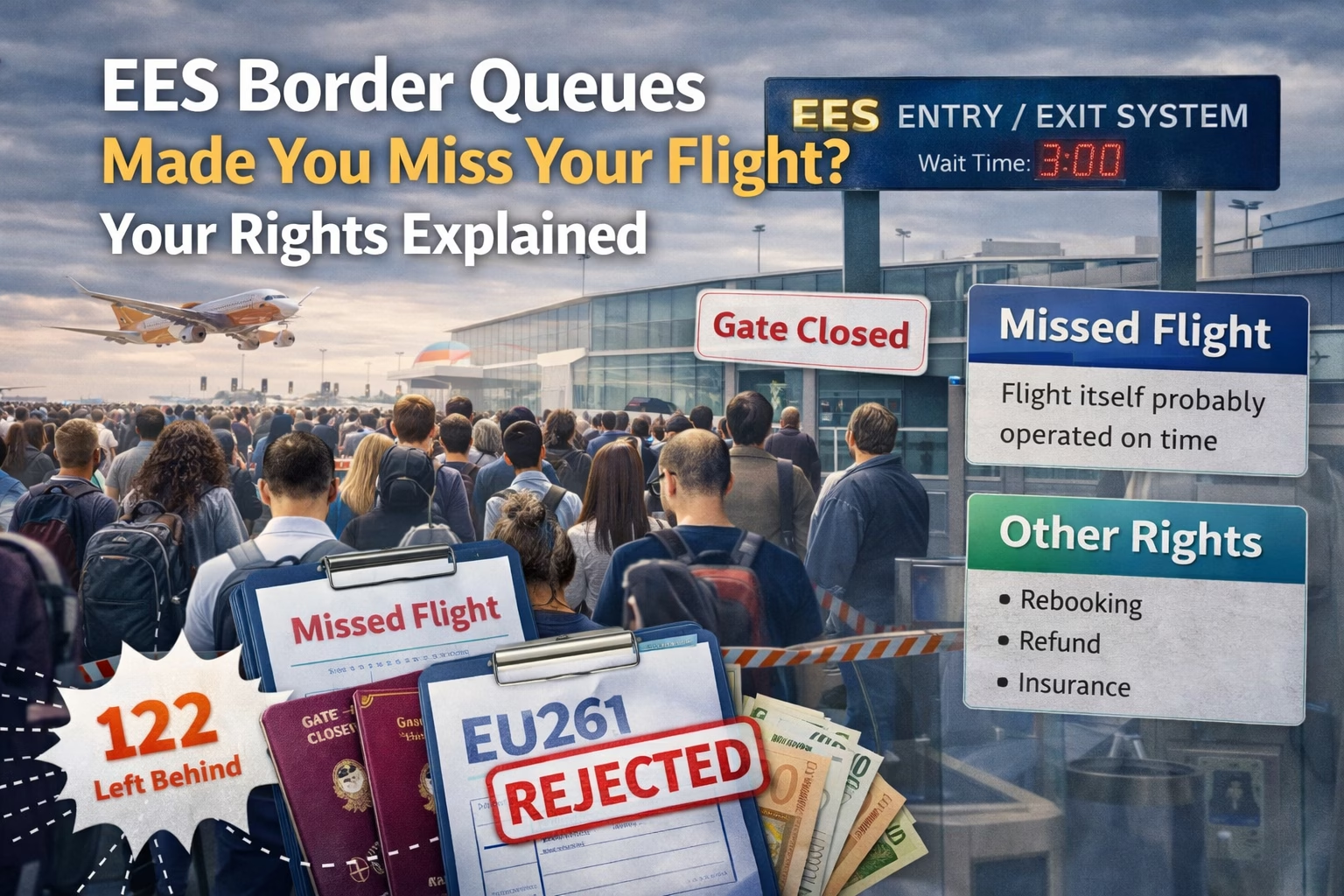
EES border queues are now disrupting real flights. After a widely reported incident at Milan Linate where dozens of passengers missed an easyJet departure during long passport-control lines, many travellers are asking the same question: if airport border queues made you miss your flight, can you claim anything at all?
A major missed-flight case made this issue headline news.
Because the flight itself may still have operated on time.
If the airline created or worsened the problem, the analysis can change.
What Is the EES and Why Are Airport Queues Suddenly Longer?
The EU Entry/Exit System, usually shortened to EES, adds biometric border checks for many non-EU travellers entering or leaving the Schengen area. In practice, that means some passengers now face extra document checks, photography, fingerprints, and slower border-processing lines than they were used to before. In several airports, those extra steps are already creating serious bottlenecks.
For passengers, the problem is not theoretical anymore. It is no longer just “arrive a little earlier.” The issue is that long border queues can now eat through the time between airport arrival, bag drop, security, passport control, and boarding — even where the airline itself has not yet cancelled or delayed the flight.
Quick answer
If you missed your flight only because of EES border queues, standard EU261 compensation is often difficult. That is because EU261 mainly protects you when the airline cancels, delays, or denies boarding against your will. If the aircraft departed on time and you did not reach the gate, the airline will often argue this is an airport or border-processing problem, not a compensable flight disruption.
The Milan Linate Incident Changed the Conversation
This topic has suddenly become important because a real case made the risk obvious. At Milan Linate, an easyJet flight to Manchester reportedly left with only a small number of passengers onboard after a much larger group became stuck in exit-control queues linked to the new EES process.
That matters because it highlights the legal grey zone passengers now face. The flight may have operated. The passengers may have arrived at the airport hours early. But if they never physically reached the gate before closure, the airline can still frame it as a missed flight rather than a cancellation or denial of boarding.
Can You Claim EU261 Compensation If EES Queues Made You Miss Your Flight?
Usually, not automatically. EU261 is strongest when the airline cancels your flight, delays it heavily, or denies you boarding even though you were ready and eligible to travel. A missed flight caused by airport queues usually sits outside the cleanest EU261 scenarios.
That said, there are important exceptions and edge cases. If the airline kept an unrealistic check-in or bag-drop cut-off while knowing border processing had become abnormal, gave misleading instructions, failed to manage affected passengers fairly, or closed boarding in a way that may amount to denied boarding rather than simple lateness, the picture becomes more arguable.
The practical rule
EES queues alone do not guarantee compensation. But they also do not always end the story. If the airline’s own handling, timing, or communication worsened the situation, a claim or formal complaint may still be worth making.
When You Probably Do Not Have a Strong EU261 Compensation Claim
- You arrived too late for the airport conditions and missed bag drop or the gate normally.
- The flight departed on time and the airline did not cancel or bump you.
- The main problem was border-control delay outside the airline’s direct control.
- The airline offered standard missed-flight options under its terms, but not compensation.
When Your Case May Be Stronger Than It Looks
- You arrived with what would normally be more than enough time, and the delay was extreme and abnormal.
- The airline restricted bag drop so tightly that passengers could not realistically clear the new border checks.
- Staff gave incorrect instructions or failed to redirect passengers despite obvious crowding.
- You were present and ready, but boarding was refused in circumstances closer to denied boarding than a normal missed flight.
- The airline refused rerouting or support after the incident and left you to buy a new ticket at full cost.
Important distinction
Missed flight and denied boarding are not the same thing. If you were genuinely late to the gate, airlines will usually say you missed the flight. But if you were at the airport on time and the carrier refused carriage in a way that was not your fault, your rights analysis can change significantly.
So What Rights Do You Still Have?
Even where classic EU261 compensation is weak, you may still have other options. Depending on the facts, these can include:
Airline rebooking
Some carriers may move you to the next available flight, sometimes free, sometimes for a rescue or missed-flight fee.
Refund rights
If the airline later cancels or refuses reasonable rerouting, refund rules may come into play depending on how the disruption is handled.
Travel insurance
Some policies cover missed departure or travel disruption, though insurers often require strong documentation.
Card chargeback or claim
In some cases, especially where the service delivered was materially different from what was sold, your payment provider may be part of the solution.
If your case turned into a bigger disruption with cancellation, rerouting, or long arrival delay, also read our air passenger rights guide, flight cancellation compensation guide, and flight delay evidence checklist.
What Evidence Should You Keep?
For an EES queue case, evidence matters more than usual because the legal position often turns on timing and airport conditions. Save:
- your booking confirmation and boarding pass;
- screenshots showing when you arrived at the airport;
- photos or videos of the border queue;
- messages from the airline app or airport staff;
- receipts for replacement flights, hotels, meals, or transport;
- any written explanation from the airline or airport.
Best evidence
A timestamped photo of the queue, plus a screenshot showing you were checked in and at the airport well before departure, can be far more persuasive than a general complaint sent days later.
What Should Travellers Do Differently Under EES?
For now, passengers exposed to EES processing should assume the old “two hours is plenty” rule is no longer reliable on some routes. Travellers with bags, children, non-EU passports, or peak-hour departures may need a much larger buffer than before.
This is especially true for airports already in the headlines for queue disruption. If you are flying in the next few months, it is also worth checking our Summer 2026 Flight Disruptions List and keeping voucher/refund decisions in context with our voucher vs cash guide.
Missed Your Flight After Border Delays?
Your case may not fit the usual compensation template — but it may still be worth checking. The key question is whether this was just a missed flight, or a wider disruption where the airline’s conduct also mattered.
FAQ
Does missing a flight because of EES queues automatically qualify for compensation?
No. In many cases, a missed flight caused only by airport border queues does not automatically trigger standard EU261 compensation, especially if the flight itself departed on time.
Can an airline say this is not its fault?
Yes, and often it will. Airlines are likely to argue that border-control processing is outside their direct control. That is why evidence about timing, staff instructions, and airport handling is so important.
What if I arrived three or more hours early and still missed the flight?
Your case becomes more arguable, especially if the queue was extreme and abnormal. That still does not guarantee EU261 compensation, but it strengthens the case for a formal complaint, rerouting dispute, insurance claim, or escalated review.
What if the airline only offered a paid missed-flight transfer?
That may be the airline's standard policy, but it does not stop you from disputing the situation afterward if you believe the circumstances were exceptional or the airline handled the disruption badly.