Best Snacks for Long Flights
Why What You Eat at 35,000 Feet Actually Matters
Long-haul flights put your body through more than most people realize. Cabin air is kept at around 8% humidity — far drier than most deserts — which accelerates dehydration, dulls taste receptors, and slows digestion. Cabin pressure sits at the equivalent of an altitude of roughly 2,400 metres, enough to cause mild fatigue and reduce the efficiency with which your gut processes food. Combine that with a disrupted meal schedule, limited movement, and the stress of travel, and it becomes clear that what you eat on a long flight has a real impact on how you feel at the other end.
Airline food, where it exists at all, is typically designed around cost, storage, and mass production — not nutrition or how your digestion behaves at altitude. Packing your own snacks puts you in control. The right choices will keep your energy level stable, your digestion comfortable, and your mind alert for arrival. The wrong ones can make an already long flight feel longer.
Good to Know
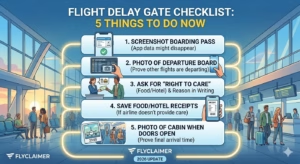
Disruptions — unexpected delays, missed connections, long waits on the tarmac — make your own snack supply even more valuable. If your flight is delayed by three or more hours, you may also be entitled to up to €600 in compensation under EC 261/2004. Having food sorted means you can focus on documenting the delay rather than hunting for an open airport café at midnight.
The Three Rules Every Good Flight Snack Must Follow
Before getting into specific recommendations, the framework matters. A snack that works perfectly at home can become a liability in the air. Three criteria filter out the bad choices before you even open the cupboard.
No refrigeration needed. Your snack will spend several hours in a bag before you eat it — time at home, transit to the airport, queuing at security, waiting at the gate. Any snack that needs to stay cold is a snack that will be unsafe or unpleasant by the time you want it. The exceptions are snacks you eat immediately in the terminal before boarding.
No strong smell. You are sharing a pressurized metal tube with hundreds of strangers for hours. Hard-boiled eggs, pungent cheeses, tuna, anything with heavy garlic or onion — these are not unpopular choices because people dislike them, but because they affect everyone around you. Strong smells also seem more intense in pressurized cabins. Save them for the ground.
Easy to digest at altitude. Pressure changes slow gut motility, meaning food moves through your digestive system more slowly than usual. High-fat, heavily processed, or very salty snacks can cause bloating and discomfort that is noticeably worse in the air than it would be on the ground. Chips, cream-filled pastries, and foods heavy in refined sugar are particular offenders. Dietary fibre, protein, and moderate natural fats digest more smoothly.
The Best Snacks to Pack, by Category
Protein & Sustained Energy
- Unsalted or lightly salted mixed nuts
- Almonds — filling, shelf-stable, no smell
- Nut and seed trail mix (no yoghurt coating)
- Oat-based bars with low added sugar
- Roasted chickpeas or edamame (sealed pack)
- Single-serve nut butter sachets with rice cakes
Fruit & Hydration
- Firm apples — high fibre, don’t crush easily
- Dried mango or apricots (no added sugar)
- Dried berries — compact, slow-release energy
- Clementines — peel easily, hydrating, fresh
- Freeze-dried fruit — lightweight, no mess
- Grapes in a sealed container
Savoury & Satisfying
- Whole wheat crackers or rice cakes
- Babybel or individually wrapped hard cheese
- Seaweed sheets — low-calorie, umami crunch
- Air-popped popcorn in a sealed bag
- Cured meats (salami, prosciutto) — avoid fresh
- Whole wheat sandwich with cured filling
Sweet Treats Worth Packing
- Dark chocolate (70%+) — antioxidants, no melt mess
- Dried dates — naturally sweet, high in potassium
- Sugar-free oat bars or seed bars
- Plain rice cakes with a little honey sachet
- Fruit leather (no added sugar varieties)
- A small square of good quality chocolate
Hydration First
No snack compensates for not drinking enough water. Buy a large bottle of water after security and commit to finishing it before landing. Avoid excess caffeine and alcohol — both accelerate dehydration in an already dry cabin. Electrolyte sachets are worth packing for very long hauls over eight hours.
What to Leave at Home: Snacks That Cause Problems in the Air
✓ Pack These
- Nuts and seeds (plain or lightly salted)
- Whole fruit — apples, clementines, firm bananas
- Dried fruit without added sugar
- Oat bars or seed bars with minimal processing
- Dark chocolate in small amounts
- Whole wheat crackers or rice cakes
- Individually wrapped hard cheese
- Air-popped popcorn (lightly seasoned)
✗ Leave These Behind
- Hard-boiled eggs — strong smell, enclosed space
- Crisps and salty chips — cause bloating at altitude
- Tuna, sardines or any oily fish
- Creamy or runny cheeses — smell and leakage risk
- Heavily sugared sweets — energy spike then crash
- Anything requiring refrigeration after 2 hours
- Liquids or gels over 100ml (security rules)
- Strong garlic or onion dishes out of respect
How to Pack Your Snacks So They Survive the Journey
The best snack becomes a mess if it isn’t packed properly. A few practical rules make the difference between arriving with a great snack and arriving with crumbs or spillage.
Use resealable zip pouches or small hard containers for anything that could crush or crumble — crackers, dried fruit, trail mix. Soft bags alone will compress under the weight of everything else in your carry-on. A rigid container takes up slightly more space but means your snack is edible when you want it.
Keep snacks in the most accessible part of your bag — ideally the outer pocket — so you aren’t rummaging through everything to find them mid-flight. If you’re travelling with family, pre-portion snacks per person into individual bags. It keeps things cleaner and avoids disputes over the last handful of almonds over the Atlantic.
For international arrivals, remember that many countries confiscate fresh produce at customs to prevent the import of agricultural pests and diseases. Eat your fresh fruit and vegetables before landing, or choose packaged snacks for the final leg. Dried and sealed food is almost always permitted.
Security Rules
Solid foods pass through airport security with no restrictions. The issue is with anything gel-like or liquid — peanut butter, hummus, yoghurt, and similar spreadables are classified as liquids by most security agencies and must comply with the 100ml liquid rule if carried in hand luggage. If you want these on board, use single-serve sachets that fall under the limit, or buy them airside after the security checkpoint.
When Delays Strike: Snacks Become Even More Important
The scenario every passenger dreads — a long delay at the gate or an unexpected overnight wait — is exactly when having your own food supply changes your experience most dramatically. Airport food is expensive, options narrow quickly after 9pm, and vending machines do not constitute dinner.
If your flight departs from an EU, UK, or ECAA airport and is delayed by two or more hours, the airline is legally required to provide you with meals and refreshments at no cost. This right exists under EC 261/2004 regardless of whether extraordinary circumstances apply. In practice, airlines do not always proactively offer vouchers — you have to ask for them at the desk by name.
If the delay extends to three or more hours upon arrival at your final destination, you may also be entitled to financial compensation of up to €600 per passenger. Your own snack supply keeps you comfortable while you gather the evidence and documentation that strengthens that claim.
Was Your Flight Delayed or Cancelled?
If you were disrupted by a delay of 3+ hours, you may be owed up to €600 under EC 261/2004. FlyClaimer checks your eligibility in seconds.
Frequently Asked Questions
Can I bring homemade food on a plane?
Yes — solid homemade food is permitted through security with no restrictions on quantity. The limitation applies to gels and liquids (anything over 100ml). So a homemade sandwich, a container of cut vegetables, or a bag of homemade granola are all fine. A homemade yoghurt dip or liquid soup would need to comply with the 100ml rule if carried in hand luggage.
How much food should I pack for a long-haul flight?
A reasonable guide is two to three snacks per person for every four to six hours of travel time — from leaving home to arriving at your destination, not just the flight itself. Always pack slightly more than you think you’ll need. Delays, extended boarding, or an unexpected diversion can add hours to your journey, and having a buffer snack is far better than running out.
Are nuts allowed on planes? I heard some airlines ban them.
Security agencies permit nuts through checkpoints without restriction. However, some individual airlines ask passengers not to consume nut products on board if a passenger on the flight has declared a severe nut allergy. This is handled at the gate or by cabin crew — if this applies to your flight, you will be informed before or during boarding. As a general consideration, if you are travelling in a confined space with strangers, lightly salted nuts in a sealed bag are the most considerate form of packing.
What snacks help with jet lag?
Protein-rich snacks — nuts, seeds, oat bars — help maintain stable energy levels without the blood sugar spikes that worsen fatigue. Staying well-hydrated throughout the flight is the single most effective dietary strategy for reducing jet lag severity. Avoid alcohol and excess caffeine, both of which disrupt sleep cycles and accelerate dehydration. If you are crossing multiple time zones, try to align your eating times with the destination’s meal schedule as early in the flight as possible.