EU261 Compensation Rules in 2026: What Still Applies and What Passengers Should Know
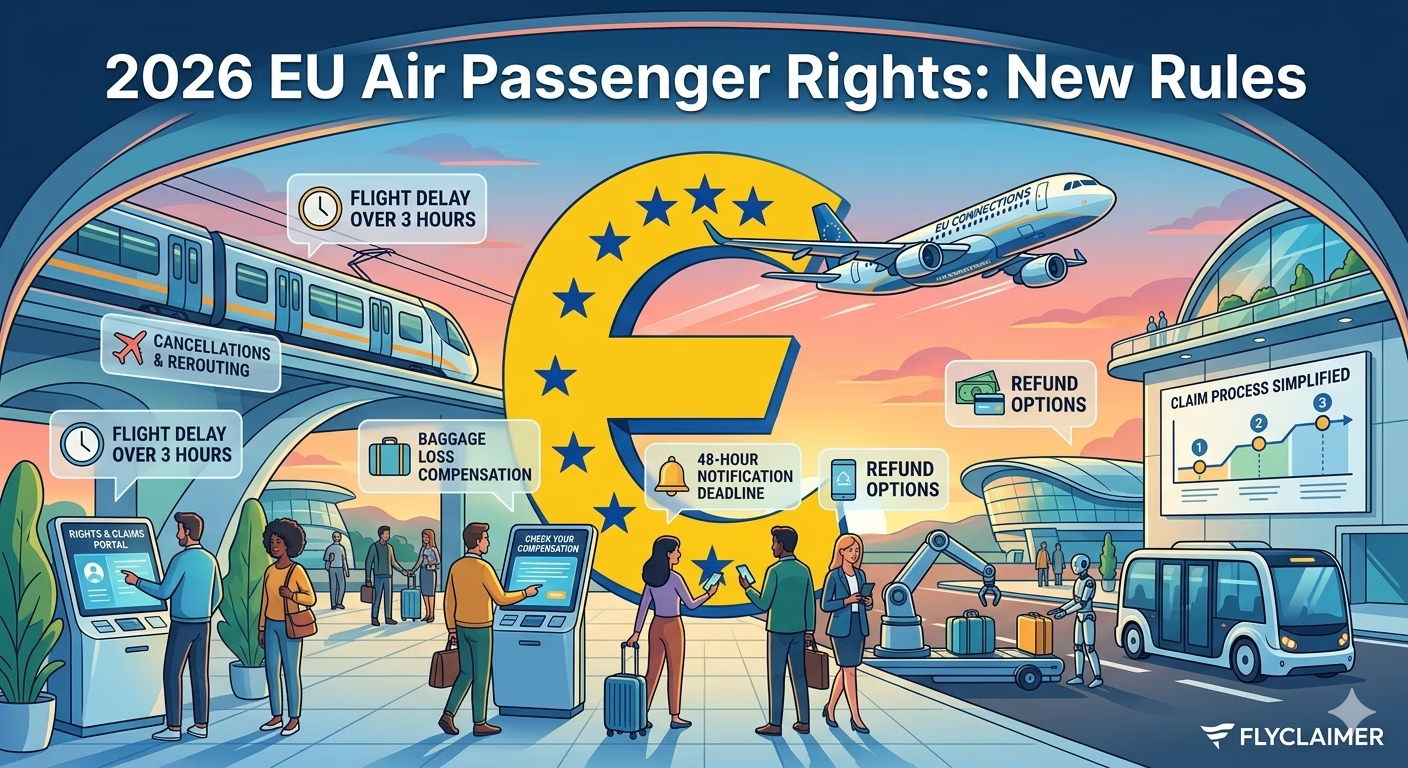
If you searched for EU air passenger rights 2026, you have probably seen conflicting claims about what changed. The good news is that the core protection for delayed flights, cancelled flights, denied boarding, rerouting, reimbursement, and airport care still comes from EC 261/2004. What changed most in 2026 is the amount of discussion around possible reforms — not the fact that passengers still have important rights.
This guide explains what still applies now, what is being proposed or debated, and what you should do if an airline tries to reject a compensation claim by saying the rules changed.
Quick Answer: What Still Applies in 2026?
| Current legal baseline EC 261/2004 still governs compensation and assistance for many disrupted flights in Europe. |
| Still highly relevant The familiar compensation structure of €250 / €400 / up to €600 remains the main benchmark passengers still associate with EU261 compensation. |
| Important caution Not every “2026 change” mentioned online is automatically final, live, or enforceable in the way article headlines suggest. |
| Best practical move If your airline says “the rules changed,” ask them to explain exactly which rule they rely on and how it applies to your route, airline, and disruption date. |
What EC 261/2004 Still Gives Passengers
EC 261/2004 remains the legal foundation for most flight disruption rights in Europe. In practical terms, it is still the starting point for passengers dealing with:
- Flight delay compensation
- Cancelled flight compensation
- Denied boarding rights
- Rerouting and reimbursement
- Care at the airport during long disruptions
For many passengers, the most familiar part of the system is the idea that a serious delay, cancellation, or overbooking event may trigger financial compensation depending on the route, the timing, and the airline’s explanation.
Another important point is that the value of your ticket does not decide whether you have rights. A low-cost fare can still qualify under the same compensation framework as a much more expensive ticket on the same route.
| Key principle Your fare price does not remove your rights. A cheap ticket can still qualify for EU261 compensation if the legal conditions are met. |
| Related: Wizz Air vs Ryanair Compensation: EU261 Rules, Timelines, and Common Rejections → |
Did the 3-Hour Delay Rule Change in 2026?
This is the question most passengers care about. If your flight arrived more than three hours late, can you still claim? In many real-world cases, the safest approach is to treat the existing EC 261 framework as the baseline first. That is why airlines, claim handlers, and passengers still commonly refer to the familiar 3-hour benchmark when discussing delayed flight claims.
The confusion comes from reform headlines and political discussions that suggest broader changes may be coming. That does not mean every article, social post, or airline message about “new thresholds” automatically overrides the practical framework passengers still rely on today.
When reading about EU passenger rights in 2026, it helps to separate three things clearly:
- Current enforceable rights
- Reform proposals or political direction
- Airline messaging used to explain or reject claims
If an airline tells you your delayed flight no longer qualifies because “the rules changed,” ask them to explain the legal basis for that position in writing.
Current EU Flight Compensation Amounts in 2026
For most passengers searching this topic, these are still the key compensation bands associated with the current EU261 structure:
| Flight distance | Typical compensation band |
| Up to 1,500 km | €250 |
| 1,500 to 3,500 km | €400 |
| Over 3,500 km | Up to €600 |
That does not mean compensation is automatic in every case. The outcome can still depend on delay length, route type, rerouting, and whether the airline can rely on extraordinary circumstances. But these amounts remain the main reference point passengers search for when looking up EU air passenger rights 2026.
What Rights Do You Have for Flight Delays and Cancellations?
In many disruption cases, passengers are dealing with more than one right at the same time. Depending on what happened, you may be entitled to care at the airport, rerouting, ticket reimbursement, and in some situations financial compensation.
This matters because airlines sometimes blur these rights together. A passenger may be told about a refund but not rerouting. Another may be offered care but no clear answer on compensation. That is why the first step is always to identify the real disruption type: was it a delay, a cancellation, denied boarding, or a missed connection?
Once that is clear, it becomes much easier to understand which rights may apply to your case and what evidence you should collect.
What Airlines Still Owe You at the Airport
One of the most overlooked parts of EU passenger rights is the right to care. Many passengers focus only on compensation and forget that airlines may still owe support during the disruption itself.
Depending on the circumstances, this may include:
- Meals and refreshments
- Communication assistance
- Hotel accommodation when an overnight stay becomes necessary
- Transport between the airport and the hotel
- Rerouting or reimbursement options
These rights are important because they are separate from final compensation. Even if compensation later becomes disputed, the airline may still have had obligations toward you while you were stranded.
| Practical tip If the airline refuses to provide help at the airport, keep receipts and document the refusal. That makes later reimbursement much easier to argue. |
| Related: Flight Delay Evidence Checklist: What to Save Before You Leave the Airport → |
What Counts as Extraordinary Circumstances in 2026?
Extraordinary circumstances remain one of the most common reasons airlines use to reject flight delay compensation and cancelled flight compensation claims. But passengers should not treat every vague airline explanation as final.
If the airline says extraordinary circumstances apply, ask what happened, when it happened, and why it was outside the airline’s control. Labels such as “operational issues” or weakly explained disruption codes should always be examined carefully.
If you want a deeper breakdown of what airlines often get wrong, read our guide to Extraordinary Circumstances Under EU261.
What About New EU Passenger Rights Reform Proposals?
This is where many 2026 articles become too confident. There has been major discussion about reform, and passengers are right to pay attention. But there is a difference between a reform proposal, a political agreement, a future revision path, and the rights you can rely on in a live dispute today.
That is why the safest approach is simple:
- Use current EC 261 rights as your baseline
- Treat headlines about reform carefully
- Do not let vague airline wording defeat a valid claim automatically
For passengers, that approach is both more practical and more trustworthy than assuming every reported 2026 change is already fully settled for every route and airline.
How to Protect Your Claim in 2026
If your flight was disrupted, the best move is still to build your case early. Whether your issue is a delay, cancellation, missed connection, denied boarding, or baggage dispute, evidence makes the difference.
Save the following before the details disappear:
- Boarding pass or booking confirmation
- Delay or cancellation notice
- Screenshots of departure and arrival times
- Receipts for meals, transport, or hotel costs
- Any written explanation from the airline
If you are still gathering documents after the disruption, use our flight delay evidence checklist. If your airline already pushed back using weak wording, review our guide to extraordinary circumstances under EU261.
What to Do If an Airline Says “The Rules Changed”
- Ask for the airline’s reasoning in writing
- Ask which exact rule they say applies to your case
- Keep screenshots and disruption evidence
- Separate compensation, reimbursement, rerouting, and care — they are not the same right
- Do not assume a headline-level “2026 reform” automatically defeats a valid claim
Final Word
The biggest mistake passengers can make in 2026 is assuming that the rules became so “new” or so “complicated” that it is no longer worth checking their rights. In reality, the current EC 261 framework is still the starting point for most disruption claims, and passengers should still assess delays, cancellations, denied boarding, rerouting, reimbursement, and care carefully.
Yes, reform discussions have created more confusion than usual. But no, that does not mean airlines can dismiss valid claims simply by saying “the rules changed.” The smart move is still the same: check the facts, preserve your evidence, and assess your options carefully.
| Check your flight now Use FlyClaimer to review your disruption, understand where current EU passenger-rights rules may still help you, and avoid being misled by vague airline wording about “new 2026 rules.” → Check your flight |
FAQ
Did EU air passenger rights change in 2026?
There has been major discussion around passenger-rights reform, but the core EC 261 framework still remains the main baseline for most flight delay, cancellation, and denied boarding claims.
Can you still claim compensation after a 3-hour delay in 2026?
In many cases, yes. The familiar 3-hour arrival-delay benchmark remains highly relevant under the existing EC 261 framework, subject to route details and any valid extraordinary-circumstances defence.
Can Wizz Air or Ryanair charge for cabin bags in 2026?
he 2026 mandate requires all airlines to allow one personal item (under-seat) and one small trolley bag (overhead locker) at no extra cost. While low-cost carriers previously charged for the trolley bag, the new standardized dimensions (55 x 40 x 20 cm) must now be included in even the cheapest base fares.
What is the maximum compensation I can get for a delayed flight?
The maximum compensation remains €600 per passenger. The amount is determined by the distance of your flight: €250 for short-haul (under 1,500 km), €400 for medium-haul (1,500–3,500 km), and €600 for long-haul (over 3,500 km). This applies regardless of the price you paid for your ticket.